
Field notes
Vietnam Visa for Indians 2026 — Complete Guide
Quick Answer
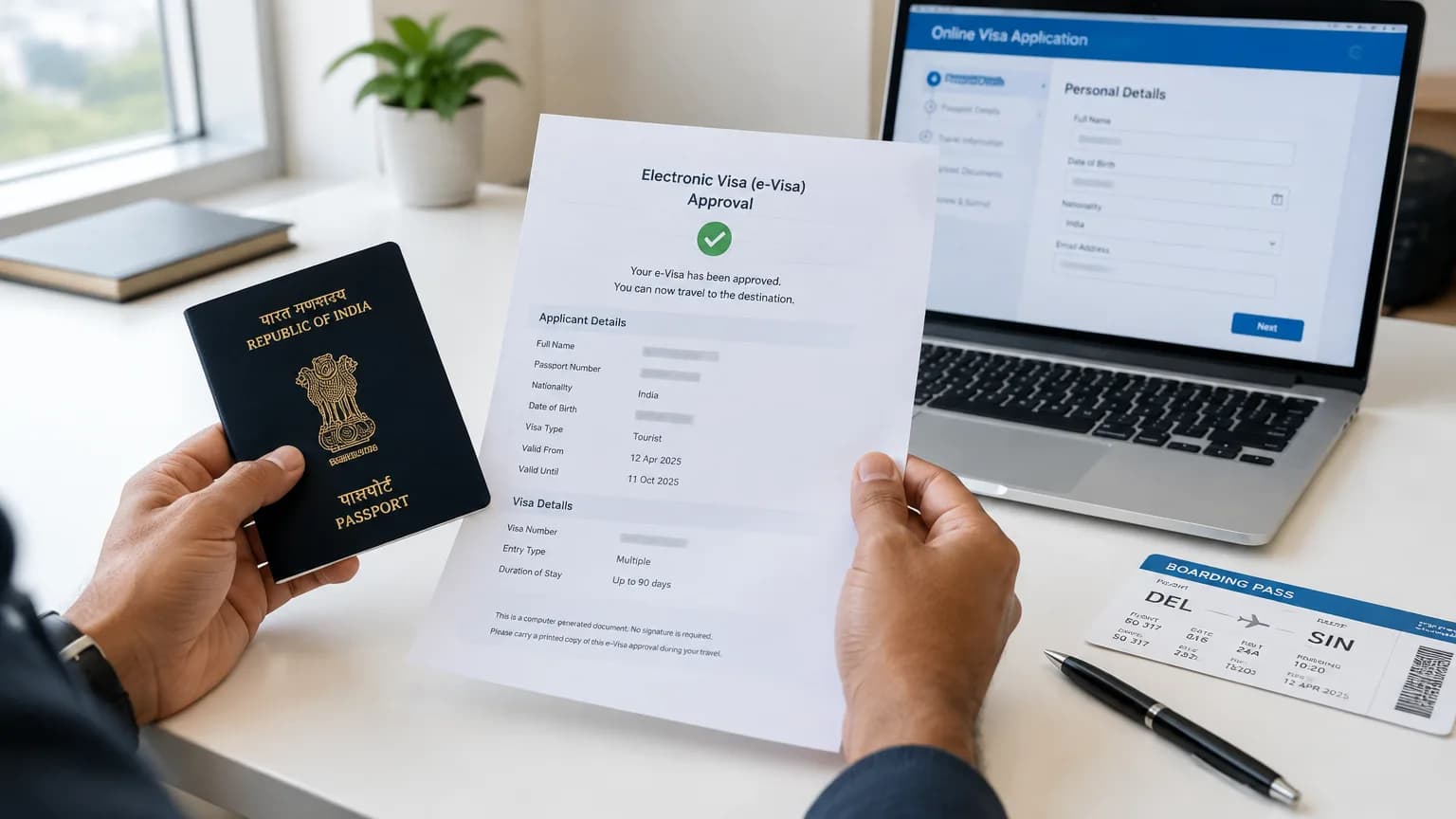
Vietnam visa for Indians is an electronic visa (e-visa) applied for online before travel. The e-visa is valid for up to 90 days and is available as single or multiple entry. According to the official government portal, processing takes 3 working days. Print the approved e-visa and carry it with your passport at every entry and exit point.
The Vietnam E-Visa in Brief
The table below summarises the confirmed details for Indian passport holders applying for the Vietnam e-visa. Every figure comes from the official government source.
| E-visa detail | Verified value |
|---|---|
| Visa category | e-Visa |
| Visa type | Vietnam electronic visa (e-visa) |
| Validity | Maximum 90 days; single or multiple entry |
| Fee (as of 2026) | USD 25 — single-entry; USD 50 — multiple-entry |
| Processing time | 3 working days |
| Application channel | Online — personally or through a requesting agency or organisation |
| Official portal | evisa.gov.vn or thithucdientu.gov.vn |
Is the E-Visa the Only Option for Indians?
The e-visa is the confirmed entry route for Indian passport holders travelling to Vietnam. No visa-free arrangement or visa-on-arrival facility for Indian travellers is stated in the official notes.
Alternative entry routes are listed as unclear in the official source. Travel forums and third-party booking sites sometimes mention a visa-on-arrival option — treat that as unverified until you confirm it directly on the official portal. Some older articles still circulate information about letter-of-approval systems that predate the current e-visa scheme — those are not the current process.
The e-visa system was designed to be straightforward: one online application, one fee, and a printed approval you carry to the airport. Until the Vietnamese immigration authority confirms an alternative, plan your trip on the basis that the e-visa is your only confirmed option. Travelling as part of a group tour? Your tour operator or requesting organisation can apply on your behalf through the same portal, but the visa is still issued individually to each passport holder.
How to Apply for the Vietnam E-Visa
The application is entirely online through the Vietnam Electronic Visa Portal. There is no embassy visit, appointment or biometric requirement in the process. The steps below cover what you need to do from start to finish.
- Online step 1: Open the official application. Go to the Vietnam Electronic Visa Portal at evisa.gov.vn or thithucdientu.gov.vn. Type the address directly into your browser address bar — do not click on sponsored search results or links from travel forums. Some websites replicate the portal's design closely and charge a service fee on top of the government fee. Both domains are the only ones named by the Vietnamese government for this application.
- Online step 2: Complete the application form. Enter your personal details and passport information exactly as they appear on your passport. This means your full name as printed (including any initials or middle names), your date of birth, your passport number, and your passport expiry date. Every character matters. A mismatched name or a transposed digit in the passport number can cause a problem at the immigration counter, even if the e-visa was approved. Read through the completed form once more before moving to the next screen. Applying through a requesting agency or organisation? Confirm that they are entering your details from your actual passport, not from a booking form where your name may have been shortened.
- Online step 3: Add your documents. Upload a clear image of your passport data page and a photograph with you looking straight ahead without glasses. Both files must be sharp, well-lit and show the full document without cropping. The passport data page image should show all printed text clearly, including the machine-readable zone at the bottom. For the photograph, use a plain background and ensure your face is fully visible. A photo taken in poor light, with shadows across the face, or with spectacles will not meet the stated requirement and may cause the application to be returned.
- Step 4: Pay the fee electronically. The fee is USD 25 for a single-entry e-visa and USD 50 for a multiple-entry e-visa. Payment is made electronically through the portal. Most Indian travellers pay by international debit or credit card. Keep a screenshot or email confirmation of the transaction — you may need it if there is a query about your application status. Whether any separate levy or tax applies is listed as unclear in the official notes, so check the payment screen on the portal for the final amount before confirming.
- Step 5: Submit and track your application. After submitting, use the portal's tracking feature to check your application status. Processing takes 3 working days according to the government portal. That is the stated figure; the official notes do not describe what happens if processing runs longer than 3 working days. Weekends and Vietnamese public holidays do not count as working days, so a Friday submission may not be processed until the following Wednesday or later. Apply at least a week before your departure date to leave room for any correction or resubmission.
- Step 6: Receive and print the approval. Once the application is approved, download and print the e-visa. Carry the printed copy with your passport at every entry and exit point in Vietnam. A digital copy saved on your phone is a useful backup, but the printed version is what immigration officers typically check. A screenshot is not a reliable substitute for a printed document — print it before you leave India.
The Upload Checklist for Vietnam
The document list for the Vietnam e-visa has three items. Every upload must be clear and readable — the portal will not process blurred or incomplete images.
| Upload | Requirement |
|---|---|
| Passport | Valid passport |
| Passport data-page image | Clear scan or photograph of the passport data page |
| Photograph | Applicant looking straight ahead, without glasses |
No other documents are listed in the official source. Do not upload additional items unless the portal specifically asks for them during the application. Indian travellers sometimes add supporting documents such as hotel bookings or flight tickets out of habit from other visa applications — the Vietnam e-visa checklist does not require these, and uploading unrequested files can complicate the review.
A practical note on the passport data page: Indian passports issued in recent years have a clearly printed data page with a photograph, personal details and the machine-readable zone. Scan or photograph this page only — not the visa pages or the back cover. Ensure the image is not rotated and that all four corners of the page are visible.
For the photograph, the requirement is straightforward: face forward, no glasses. Use a recent photograph taken against a plain, light background. Avoid selfies taken at an angle or photographs cropped from a group shot, as these often fail the straight-ahead requirement.
Vietnam E-Visa Fee and Timing
The Vietnam e-visa fee in 2026 is USD 25 for a single-entry visa and USD 50 for a multiple-entry visa, as listed on the official government portal. Payment is made electronically at the time of application. Whether any separate levy or tax applies is listed as unclear in the official notes — confirm the final amount on the payment screen before you submit.
For Indian travellers paying by card, the amount will be charged in USD. Your bank may apply a foreign currency transaction fee on top of the visa fee — that is a bank charge, not a government fee, and it varies by card issuer. Check with your bank before applying to know the exact rupee amount that will be debited.
Processing takes 3 working days. That is the figure stated by the government portal; the notes do not confirm what happens if processing is delayed beyond that. In practice, applying on a Monday gives you a reasonable chance of receiving the approval by Thursday, assuming no issues with your documents. A Friday application may not be processed until the following week. Build in extra time before your flight, especially when your travel date falls after a Vietnamese public holiday. Applying at least a week ahead gives you room to correct any issue without rushing.
There is no confirmed fee for extending the e-visa once inside Vietnam, because the extension process itself is listed as unclear. Do not assume the extension fee mirrors the original application fee — check the official portal for the latest position.
Why E-Visa Applications Go Wrong
Most rejections and delays come down to a small number of avoidable mistakes. These are the ones that come up most often for Indian travellers applying for the Vietnam e-visa.
- Mismatched passport details. Copy every detail — name, date of birth, passport number, expiry date — directly from the passport. Even a single character difference can trigger a problem at the immigration counter. Indian passports sometimes have names formatted differently across pages; use the data page as your reference, not the booklet cover.
- Unreadable document uploads. A blurred passport scan or a photograph taken in poor light will get the application returned. Use a flatbed scanner where possible, or a well-lit phone camera held flat above the document. Check the image on a laptop screen before uploading — phone screens can make a blurred image look sharper than it is.
- Photograph with glasses. The stated requirement is a photograph with the applicant looking straight ahead without glasses. A photo with glasses, sunglasses or tinted lenses does not meet this requirement, even if the face is otherwise clearly visible.
- Choosing the wrong visa type. Single-entry and multiple-entry are separate products at different prices. A trip that involves crossing into Cambodia or Laos and returning to Vietnam requires a multiple-entry e-visa. Pick the type before you pay — changing it after submission may require a fresh application and a new fee.
- Using unofficial lookalike sites. Some websites replicate the official portal design closely and charge a service fee on top of the government fee. Use only the domains named by the official source: evisa.gov.vn or thithucdientu.gov.vn. When unsure whether a site is official, close it and type the address directly into your browser.
- Applying too close to the travel date. Three working days is the stated processing time, but weekends and public holidays are not working days. A last-minute application leaves no room to fix a document error or resubmit. Apply at least a week before departure.
Extending Your Stay
Extension conditions and the procedure are listed as unclear in the official notes. No confirmed in-country extension process exists for the Vietnam e-visa, and no confirmed fee or authority is named for doing so.
The e-visa is valid for a maximum of 90 days. Plan your trip within that window. A slow trip through Hanoi, Hoi An and Ho Chi Minh City with side trips can add up quickly — map out your dates before applying so you know whether 90 days covers your itinerary.
For any question about extending your stay beyond the e-visa validity, check the official portal or contact the Vietnamese immigration authority directly. Travel forums and agents who cannot cite an official source are not reliable guides here. Extension rules can change, and acting on outdated information could put your legal status in Vietnam at risk.
Transit and Layover Rules for Vietnam
Transit rules for Vietnam are listed as unclear in the official notes. An itinerary that passes through a Vietnamese airport — Noi Bai in Hanoi, Da Nang International, or Tan Son Nhat in Ho Chi Minh City — en route to another country should be verified with your airline and the Vietnamese immigration authority before you fly. Do not assume a transit is visa-free without checking, particularly when you plan to leave the international transit area.
Pre-arrival online registration and arrival cards are also listed as unclear in the official notes. Some countries require travellers to complete a health or immigration declaration before boarding or on arrival. Check whether Vietnam requires either of these steps before your departure date, as requirements can be introduced or changed with limited notice.
A levy or tax on entry or exit is listed as unclear. Do not assume it is included in your airline ticket price. Verify on the official portal before travel so there are no surprises at the airport check-in counter or departure gate.
Insurance
The official notes do not state whether travel insurance is required or recommended for the Vietnam e-visa. The document checklist does not include an insurance policy as a required upload. Check the official portal for any insurance condition that may apply to your visa category before you travel, as requirements can be updated independently of the visa fee or processing rules.
Where to Apply and Verify
Apply directly on the Vietnam Electronic Visa Portal at evisa.gov.vn or thithucdientu.gov.vn. These are the two domains named by the official government source. Applying through a requesting agency or organisation is also permitted — this is the route used by some group tour operators — but the portal is the direct route and avoids any intermediary fee.
When verifying your application status after submission, use the same official portal. The tracking feature is available at the same domain. Keep your application reference number from the submission confirmation, as you will need it to check the status.
The visa facts on this page were verified on 15 October from official government sources. Fees, processing times and entry rules can change without advance notice. Confirm the current details on the official portal before you pay or book flights. Where a detail on this page differs from what the portal currently shows, follow the portal.
Tripstor can help you time your Vietnam visa application alongside your flights and itinerary — get in touch to plan your trip.