
Adventure
7 nights · 8 days
Madhya Pradesh · Flexible itinerary
Madhya Pradesh Big Game Wildlife Circuit 7N 8D
Starting from
₹32,500/ person
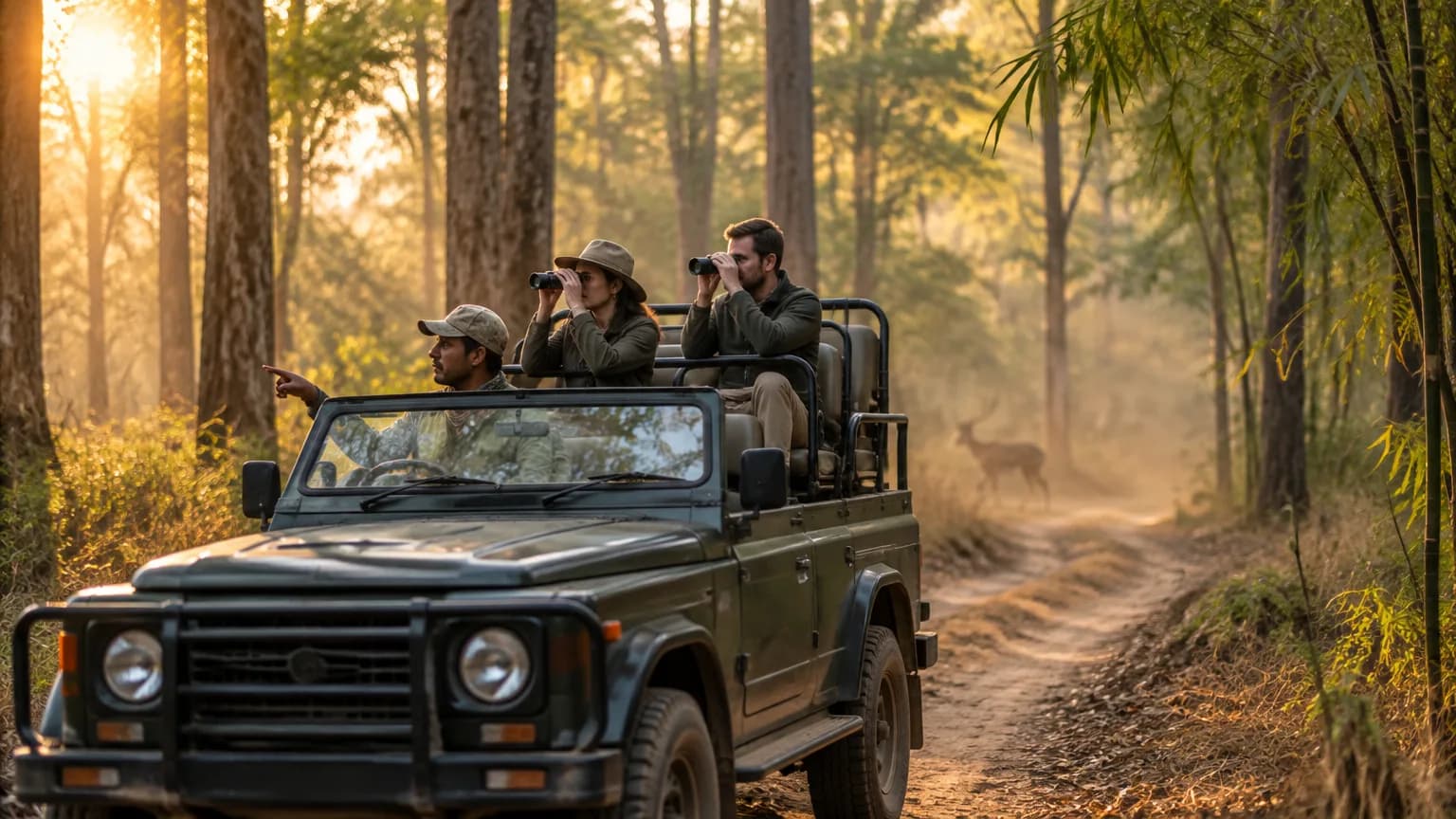
Madhya Pradesh adventure packages are domestic land-only itineraries built around jeep safaris, forest walks and fort visits across the state. They suit travellers who can handle early starts, dusty tracks and road transfers of three to five hours between parks. The effort is moderate, mostly seated safari time with some uneven walking. October to March is the most comfortable window, and indicative pricing starts at Rs.24,999 per person for 2026.
Madhya Pradesh suits travellers who want jeep safaris, forest walks and fort climbs without technical mountaineering. You need a basic fitness level rather than prior adventure training. Most safari days start before sunrise and involve several hours seated in an open jeep on uneven tracks, so neck and back comfort matters more than stamina.
Children are generally allowed on safaris from around age five, though this varies by park and jeep-sharing rules, so confirm at booking. Travellers with knee or hip trouble should avoid the long staircases at Gwalior and Mandu and stick to vehicle-based sightseeing. Anyone wanting a slower pace can choose fewer park nights and more heritage stops.
Heritage stops such as Sanchi and Khajuraho are best visited early, before tour groups arrive. Allow more road time than the map suggests; forest transfers between Kanha and Bandhavgarh often take four to five hours.
| Activity | Effort level | Season |
|---|---|---|
| Jeep safari, Kanha or Bandhavgarh | Low, seated but bumpy | October to June; core zones closed in monsoon |
| Bhimbetka shelter walk | Easy, short uphill | October to March |
| Gwalior Fort stairs | Moderate, many steps | October to March |
| Mandu plateau cycling | Moderate, uneven ground | October to February |
| Orchha river-side walk | Easy, flat | October to March |
Summer heat can reach 45°C in the plains during April and May, so safaris shift to very early morning and late afternoon. Monsoon rain from July to September closes many core national-park areas, and exact dates vary by park. Ask at booking whether certified guides or licensed naturalists accompany each forest activity, and confirm current park rules.
A typical safari day starts with a wake-up around 5am, a briefing at the park gate, and entry when the park opens. Your naturalist explains zone rules, the distance to keep from animals, and what to do if a tiger crosses the track. Expect three to four hours in the jeep, with a mid-drive break and no walking inside core zones.
Afternoon slots usually run from around 3pm to dusk. Ask the operator before confirming whether a first-aid kit, drinking water and a working phone or radio are carried. If heavy rain or park orders close a zone, the drive is rescheduled or refunded under park policy, so check the cut-off at booking.
| Nights | Route in words | Effort |
|---|---|---|
| 3 nights | Bandhavgarh only, two safari slots a day | Easy to moderate |
| 5 nights | Kanha plus Bandhavgarh, road transfer between parks | Moderate |
| 7 nights | Pench, Kanha and Bandhavgarh with short heritage stops | Moderate |
| 9 nights | Safari circuit plus Bhimbetka, Sanchi, Gwalior or Orchha | Moderate, more road time |
A practical first trip runs 7 to 9 days. Build in a rest half-day between parks, as back-to-back safaris tire most travellers by the fourth day.
Bring broken-in walking shoes, a hat, sunglasses, sunscreen, a light jacket for winter mornings and a torch. Binoculars help, though jeeps usually carry spotters. Jeep and naturalist arrangements are usually handled by the operator, but personal gear is not provided.
Park entry permits are limited per zone and per slot, so book early for peak weeks. Age and health rules differ between parks, and some activities need a signed waiver. Where a rule is not confirmed here, confirm at booking rather than assuming.
Indicative land-only pricing for this theme starts at Rs.24,999 per person for 2026. Final cost moves with the number of safari slots, zone type, jeep sharing, hotel category and season. Peak months from October to February carry higher rates, and park activity fees are confirmed at booking.
| Month | What it means for this trip |
|---|---|
| October to November | Dry, comfortable days; peak season and highest prices |
| December to February | Cold mornings, best all-round comfort; peak crowds |
| March | Warming up, still manageable; medium crowds |
| April to June | Very hot, up to 45°C, but strong wildlife sightings; lower prices |
| July to September | Monsoon; many core park areas closed, roads can be affected |
Choose October to March if comfort matters more than sighting odds. Pick April or May only if you can handle the heat and want a strong chance of tiger sightings.
Bhopal, Indore, Jabalpur and Khajuraho have airports with connections from major Indian cities. Rail is the other main option, with links to Bhopal, Jabalpur and Umaria for Bandhavgarh. From there, road transfers take you to the parks and heritage towns.
Distances look short on a map, but forest roads are slow, especially after rain. Air access and road conditions change through the year, so confirm at booking. Altitude is not a concern here; the main issues are heat, dust and monsoon road closures.
Tell us your fitness level, experience and dates and we will confirm the right route and difficulty.