Sacred Sites, Season and Basics at a Glance
Khajuraho sits in central India in Madhya Pradesh's Chhatarpur district, and its surviving temples are arranged in three geographical groups: the Western, Eastern and Southern clusters. The Western Group is the principal complex and the natural centre of any visit. October to March is the season to plan for; summer temperatures commonly reach 40–45°C, and the monsoon months bring moderate to heavy rain that limits outdoor walking. Two nights cover the temple groups well; three nights allow you to add a Panna National Park jeep safari. Khajuraho Airport (HJR), about two kilometres from the temple sites, is the air gateway, and Khajuraho railway station is roughly five kilometres from the main town.
The Main Sites and Why They Matter
The temples at Khajuraho are a record of Nagara-style architecture and sculpture, built largely between the 9th and 11th centuries. Each group rewards a different kind of attention, and moving through them slowly gives far more than rushing between them.
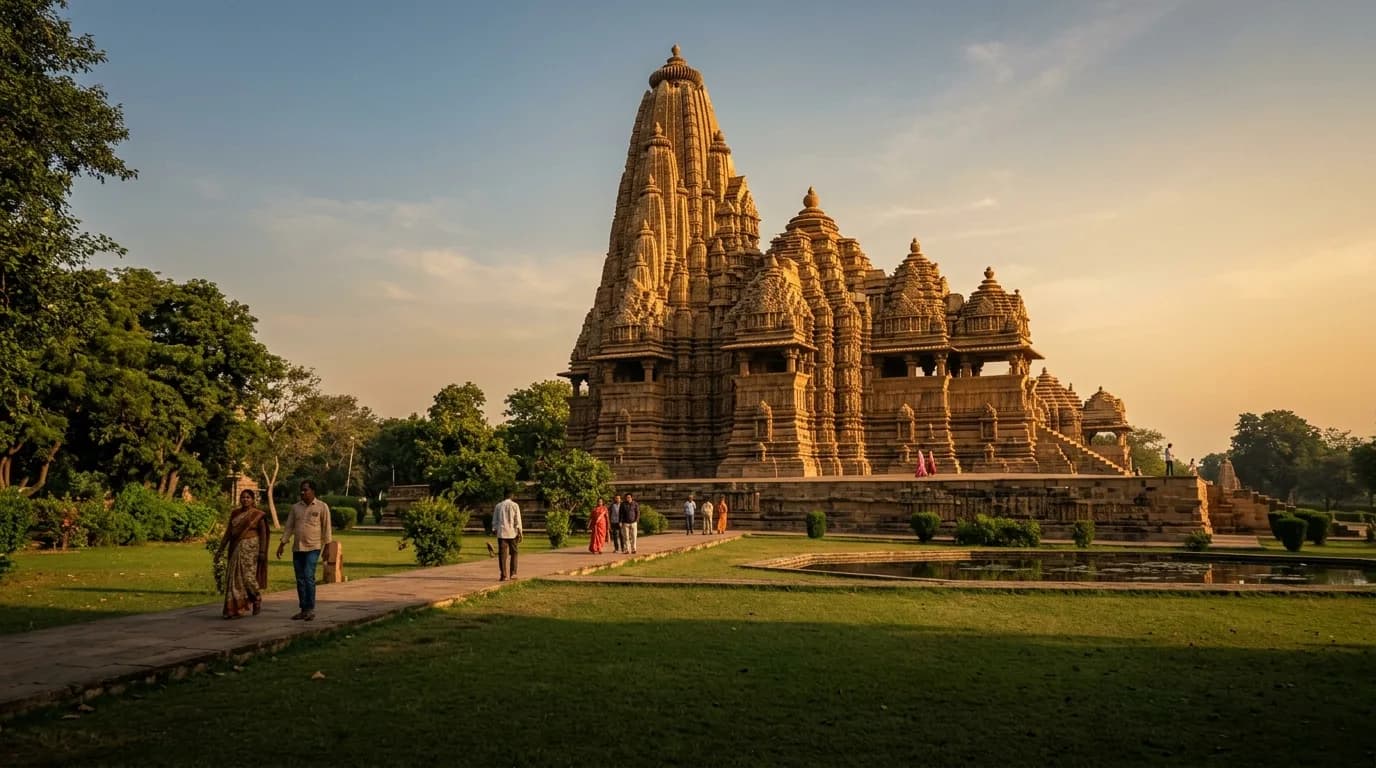
- Western Group of Temples — the principal complex, holding the main concentration of surviving temples. Kandariya Mahadeva, Lakshmana and Vishvanatha stand here, and the carved outer walls carry the site's reputation. Allow three to four hours for this group alone.
- Kandariya Mahadeva Temple — the largest and most elaborate temple in the Western Group. Its curvilinear shikhara and layered sculpted bands are what most visitors picture when they think of Khajuraho. One to two hours is enough if you are not reading every carved panel in detail.
- Lakshmana Temple — a major Western Group temple with a finely worked doorway and a raised platform. It stands close to Kandariya Mahadeva, so the two are usually seen in the same stretch of the morning.
- Vishvanatha Temple — among the principal temples of the Western Group and a good place to study carved figures at eye level without the crowds that gather around Kandariya Mahadeva.
- Devi Jagadambi Temple — a named temple within the Western Group complex, worth a careful look at its outer wall carvings before moving on.
- Eastern Group of Temples — a separate cluster that includes Jain temples such as Parsvanatha. The mood here is noticeably quieter than the Western Group, and most temples in this group are free to enter. Allow two to three hours.
- Parsvanatha Temple — the principal Jain temple in the Eastern Group, with detailed carvings and a calm setting. It is a natural stop for travellers on a pilgrimage or spiritual route.
- Southern Group of Temples — the most remote cluster and the least visited. Duladeo Temple belongs here. You may have the site largely to yourself, which makes it worth the extra travel time. Allow one to two hours.
- Archaeological Museum — presents Khajuraho history and artefacts in an indoor setting. It works well as a break during the hottest part of the day. Note that it stays closed on Fridays.
Darshan, Queues and Entry Practicalities
Crowds at the Western Group build through the morning and peak around midday, so the first stretch after opening is the calmest time to visit. Arriving early also gives softer light for photographs and cooler stone underfoot.
Weekends and the festival week in February draw noticeably more visitors. If you are travelling with elders or young children, a weekday morning in the off-peak months makes the experience considerably more comfortable. The Eastern Group is quieter at almost any hour, and the Southern Group is rarely crowded at all.
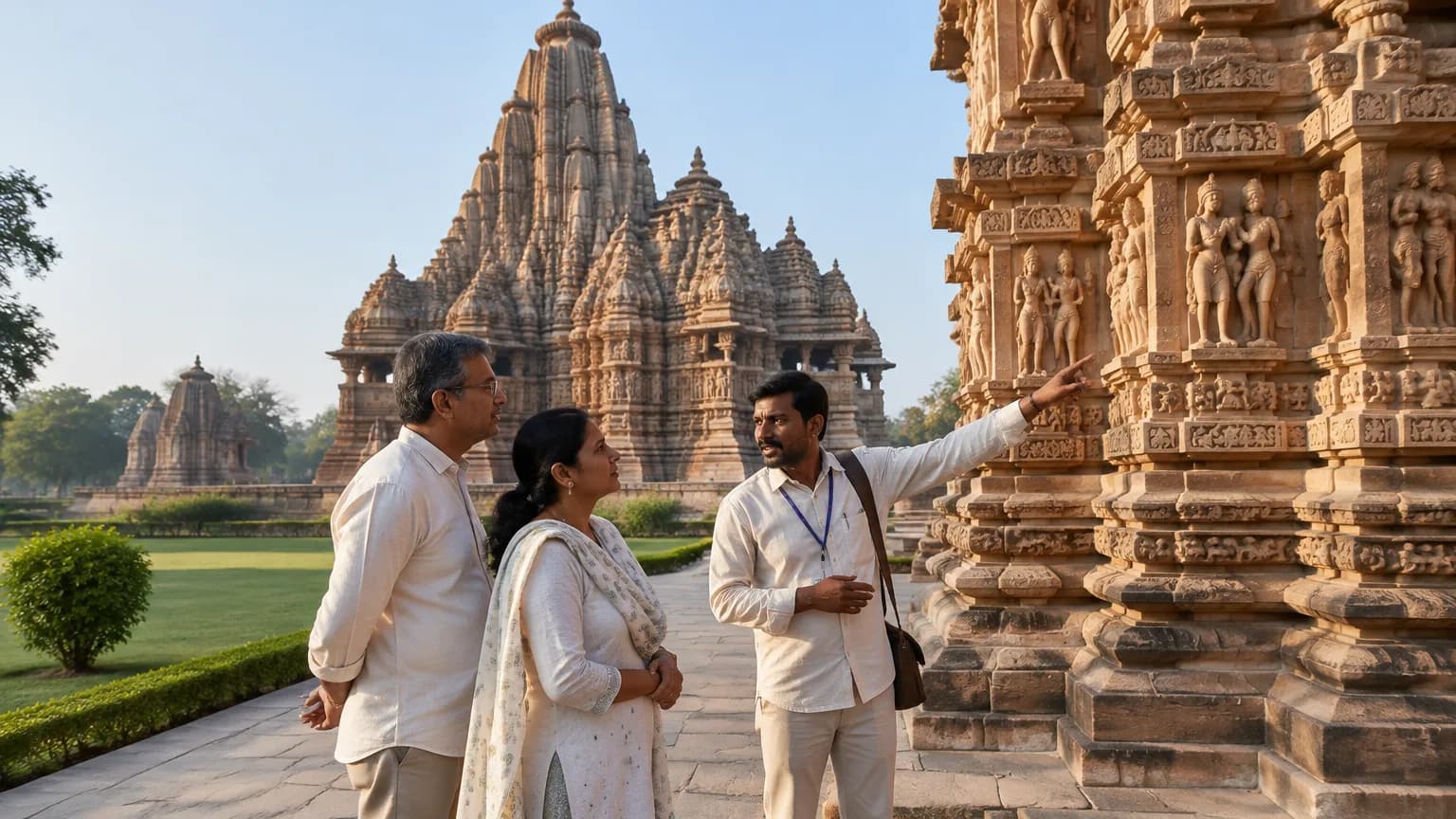
Dress modestly, with shoulders and knees covered, since these are active places of worship and not only heritage monuments. Footwear comes off before you step onto temple platforms, so slip-on shoes or sandals save time at each stop. Carry socks if the stone is likely to be hot. Photography is generally allowed in the open complexes but restricted inside sanctums; follow the notices posted at each temple and ask a guide or attendant if you are unsure. Ticket counters, guide availability and any special-entry arrangements can change, so confirm at booking or check the official source before you travel.
Festivals and the Best Season to Visit
October to March is the most comfortable window, with November to February the best stretch overall. January mornings can be cold, so carry a light layer for the early temple round; afternoons are pleasant. April to June brings severe heat, with temperatures commonly reaching 40–45°C, and July to September brings moderate to heavy rain that can cut outdoor visits short.
The Khajuraho Dance Festival takes place in February, with classical dance performances held at the Vishwanatha and Chitragupta temples. The 2026 edition was scheduled for 20–26 February. That week is culturally the richest time to be here, and also the busiest for accommodation and temple access. If comfort and quieter sites matter more than the festival, travel in the first half of December or in January, outside the event dates. Book stays well ahead for the festival period and for long weekends throughout the winter season.
Where to Stay and How to Get There
Khajuraho Airport (HJR) is the nearest airport, about two kilometres from the temple sites, with flight connections to Delhi, Mumbai, Bhopal and Varanasi. Regular flight operations were expected to resume in September 2026 after a period of suspension linked to airline scheduling, so check current schedules before locking your travel dates. Khajuraho railway station is about five kilometres from the main town. Mahoba is the closest major railhead at roughly 78 km away, while Jhansi and Satna are also used as regional railheads, with onward road travel of about three hours from Satna.
From Delhi, the Hazrat Nizamuddin–Khajuraho Vande Bharat Express covers the journey in about 8 hours 20 minutes; direct flights are also available. Travellers from Mumbai and Kolkata typically arrive at Satna by train and continue by road. Those coming from Chennai usually route via Jhansi. Confirm current schedules and road conditions at booking, as these can vary by season.
Stay Areas by Budget and Travel Style
Confirm at booking what each property offers for elders — ground-floor rooms, lift access and proximity to the temple entrance all vary by category.
A Sensible Circuit Through the Temple Groups
Base yourself in central Khajuraho for the whole trip and visit the groups in a logical order to avoid backtracking. Start with the Western Group on the first morning, when it is cool and the light is good. Keep the Archaeological Museum for the afternoon or for a hot part of the day, since it is indoors and closed on Fridays.
On the second morning, cover the Eastern Group, which is close to town and mostly free to enter. Save the Southern Group for the second afternoon or a third morning, as it is the most remote and needs a vehicle to reach comfortably. The evening sound and light show, approximately 55 minutes and offered in both English and Hindi, is an easy seated way to close the day without additional walking.
Two nights suit most travellers: one full day for the Western Group and museum, and a second for the Eastern and Southern groups. Add a third night if you want a Panna National Park jeep safari, which runs in morning and afternoon slots. For elders or those with limited mobility, plan one temple group per half-day, use a car with a driver between groups, and keep afternoons free for rest.
Food for Pilgrims and Vegetarian Travellers
Vegetarian food is the norm around the temple area, and pure vegetarian and Jain-friendly meals are straightforward to find. Many kitchens will cook without onion and garlic on request, though it is worth asking before ordering. Sattvic travellers will find simple thalis, rotis and rice without much effort.
Regional dishes worth trying include dal bafla — boiled and baked wheat balls served with dal and ghee — and poha, flattened rice cooked with onions and spices and topped with sev and coriander. Bhutte ki kees, grated corn cooked with milk and spices, is a local speciality. For sweets, look for mawa-bati, made from khoya and filled with dry fruits, and jalebi. Breakfast places around the temple area serve poha early, which fits well before a morning temple round. Carry water and a light snack if you are travelling with elders or young children.
Ways to Travel: Trip Styles for Khajuraho
Packages for Khajuraho are built around the temple groups, with optional wildlife and spiritual add-ons. The right style depends on your group's pace and interests, not the length of the itinerary.
- Cultural & Heritage — for travellers who want the three temple groups with time to look closely and understand the architecture.
- — for those who want local life, regional food and craft alongside the monuments.
- Pilgrimage & Spiritual — for visitors treating the temples as places of worship, including the Jain temples in the Eastern Group.
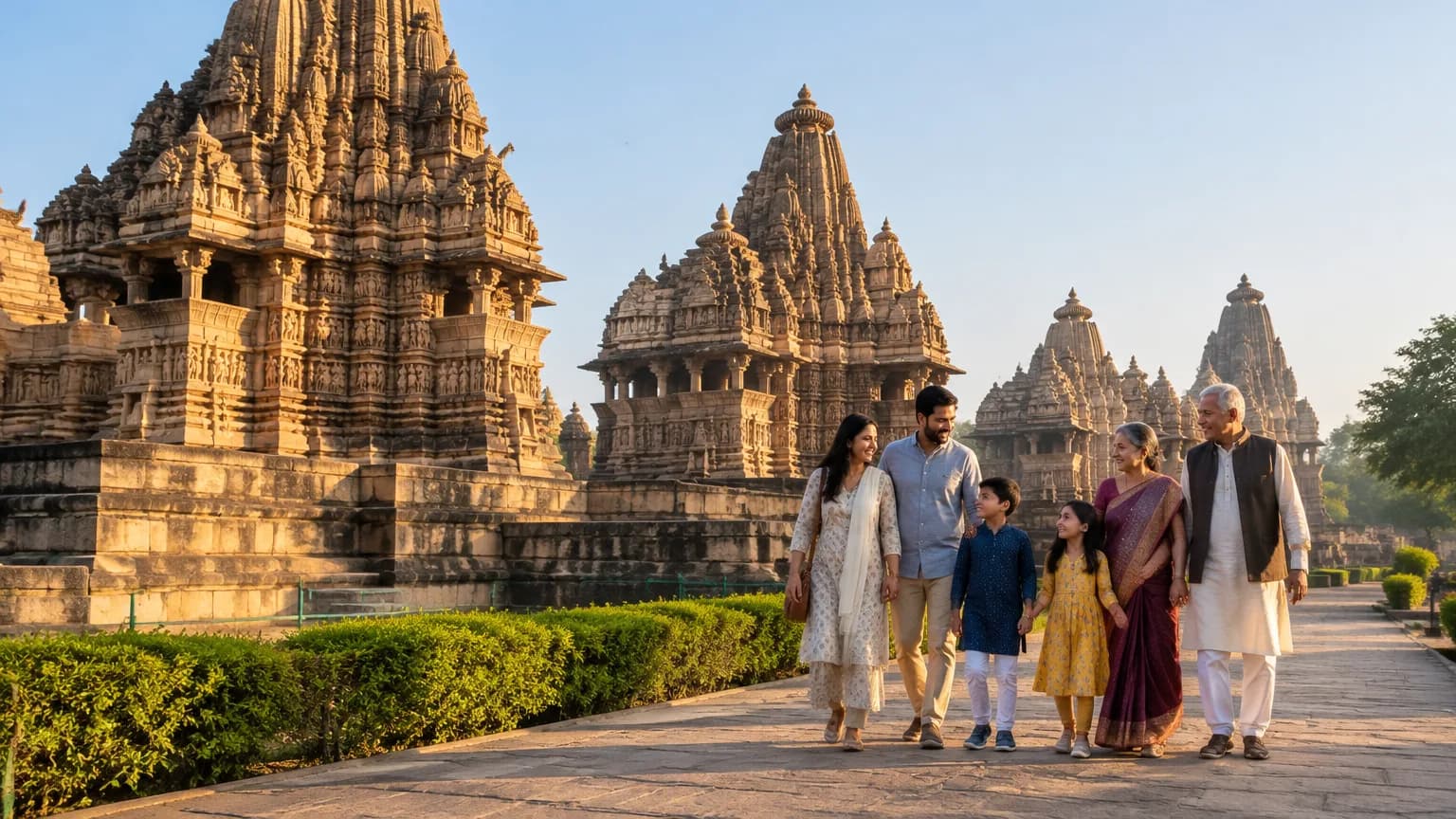
- Family — for parents and children who need shorter walking days, indoor breaks and a flexible pace.
- Group Tour — for friends or community groups travelling together on fixed departure dates.
- Short Getaway — for a two-night break covering the main sites without rushing.
- Budget — for travellers using the free Eastern Group temples and simple stays in Sevagram.
- Wildlife & Safari — for those adding Panna National Park jeep safaris to the temple visit.
- Adventure — for travellers who want the safari slots alongside longer days outdoors.
- Best of — for a first visit that combines all three temple groups, the museum and a Panna safari in one trip.
Land-only arrangements start from ₹20,000 per person on twin sharing; the final figure depends on hotel category, number of nights and whether a safari is included.
Etiquette and Tips for Elders
A few practical habits make the visit more comfortable for older travellers and first-time visitors alike.
- Dress modestly — cover shoulders and knees at all three temple groups. Carry a light cotton shawl that doubles as sun cover during the walk between temples.
- Photography rules — open complexes generally allow photography, but sanctum interiors are restricted. Read the notices at each temple and ask an attendant before filming other visitors or priests.
- Footwear — shoes come off at temple platforms. Wear slip-on sandals and carry a pair of socks for hot or rough stone, particularly during the warmer months.
- Walking distances and steps — the Western Group involves moderate distances with steps and uneven stone paving. Plan one temple group per half-day, use a car with a driver between the three clusters, and avoid the midday heat for any outdoor walking.
- Medicines and rest — carry regular medicines, oral rehydration salts and sufficient water. Rest through the afternoon, and use the seated sound and light show as an easy, low-effort evening activity rather than a further temple round.
Once the plan feels right, compare the current Khajuraho packages and pick the one that fits.