Curated starting points
Find a Kerala journey that feels like yours.
Begin with a thoughtfully paced itinerary, then change the stays, experiences, route, and budget with a Tripstor specialist.
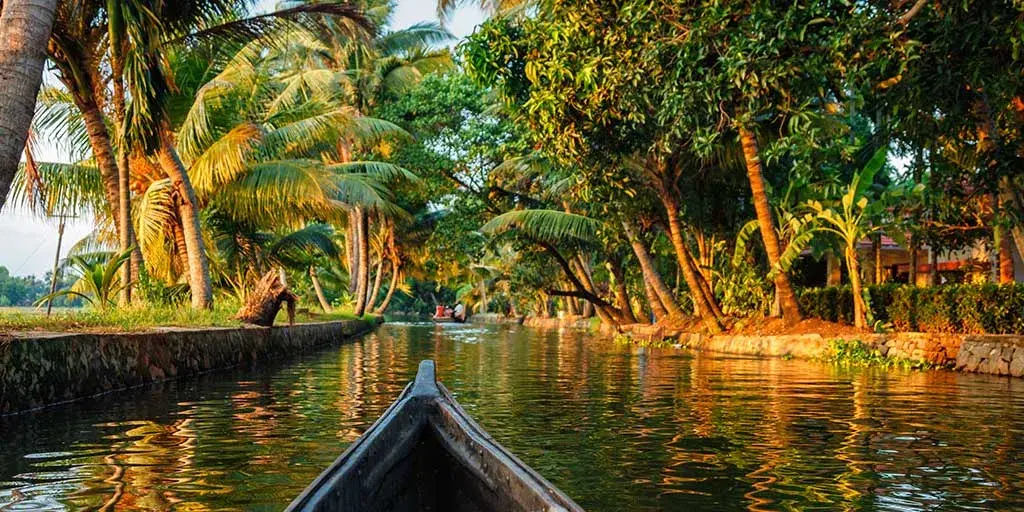
Kerala tour packages suit travellers who want backwaters, hill stations, beaches and wildlife in one domestic trip. First-timers, families, couples and elders all find a workable route here. Plan for 5 to 7 nights and aim for the dry season between October and March, when weather is settled and sea conditions are calm.
Curated starting points
Begin with a thoughtfully paced itinerary, then change the stays, experiences, route, and budget with a Tripstor specialist.
Starting from
₹65,000/ person
Destination guide
Practical context, local highlights, and honest planning advice — written for travellers from India.
Field notes
A considered guide to Kerala
Kerala is a South Indian state that combines a coastal belt, a backwater network and a hill district in one connected loop. A first trip works best over 5 to 7 nights, though 3 nights is enough if you stay in a single region. The dry season from October to March gives the most settled conditions, with December to February the busiest and most expensive window. Kochi is the main gateway for Munnar and Alappuzha; Thiruvananthapuram opens up Kovalam and Varkala.
| Detail | Value |
|---|---|
| Trip type | Domestic, South India |
| Ideal trip length | 5–7 nights |
| Best season | October to March |
| Peak months | December to February |
| Main gateway airports | Kochi (Cochin), Thiruvananthapuram |
| Package themes | Beach & Culture, Beach & Leisure, Offbeat Explorer, Wellness & Relaxation |
| Starting price (land only, twin sharing) | Rs. 50,000 per person |
Three things consistently bring Indian travellers to this destination: the backwater experience, the hill-station circuit and the ease of travelling within India with no paperwork or currency concerns.
Fort Kochi adds a heritage and food layer, and the coast around Kovalam and Varkala gives the beach days. Onam in August to September, Thrissur Pooram in April and Vishu in April are the big festival dates if you want to plan around them.
Ten places cover the state well for a first or second visit. Picking four or five and leaving the rest for a return trip is a more realistic approach than trying to cover everything in one go.
October to March is the most reliable window for a Kerala holiday, with December to February the driest, busiest and most expensive period. Calmer seas, safe beach swimming and the widest houseboat availability all fall in these months.
March, September, October and November are the shoulder months. March is warmer, reaching 25 to 33°C, but rain is still low. September and October bring moderate rain and noticeably lower prices, and they suit travellers who are willing to accept an afternoon shower in exchange for fewer crowds. The northeast monsoon brings short afternoon rain in October, particularly on the coast.
The core southwest monsoon from June to September is the period to avoid if beaches are the main reason for the trip. Rain is heavy, seas turn rough and beach swimming is often restricted or unavailable. Hill areas like Munnar stay green and quiet, and prices are at their lowest, but this window does not suit a coast-led Kerala holiday.
Kochi is the main arrival airport for most Kerala trips, and Thiruvananthapuram is the second option for travellers heading straight to the southern coast. Both airports have direct flights from Delhi, Mumbai, Bengaluru, Chennai, Hyderabad and Kolkata.
Approximate flight durations (as of October 2026): Delhi to Kochi is about 3.25 hours; Mumbai to Kochi about 2 hours; Bengaluru and Chennai to Kochi roughly 1 hour each; Hyderabad about 1.5 hours; Kolkata about 3 hours. Check current direct-flight schedules for Kolkata and Ahmedabad before booking, as availability can vary.
Kerala is well connected by rail. Main stations include Thiruvananthapuram Central, Ernakulam Junction, Thrissur, Kozhikode and Alappuzha, with overnight trains running from Bengaluru, Mumbai, Chennai and Delhi. By road, Bengaluru to Kochi takes roughly 9 to 10 hours via NH 544, and Chennai to Kochi is about 12 to 13 hours.
Once in Kochi, the onward transfer to Munnar is by private car or bus. The Ernakulam to Fort Kochi ferry takes about 10 minutes and costs ₹5 as of May 2026 — one of the most practical short transfers in the state.
Most first-timers split the trip across two or three bases rather than staying in one place. The right combination depends on the trip length and what you want to prioritise.
Couples tend to do well with a Munnar and Alappuzha pairing. Families often add Thekkady between the two. Elders generally find Kumarakom, Alappuzha or Kovalam easier, where the terrain is flat and the walking is lighter than in the hills.
A three-base route over 6 nights covers the essentials without rushing and keeps the driving logical. The sequence moves from hills to backwaters to coast, ending near Thiruvananthapuram for the return flight.
With 8 nights, add Thekkady between Munnar and the backwaters — 2 nights there covers Periyar and a spice-plantation visit. With only 3 nights, drop the coast and do Kochi plus one hill or backwater base.
Kerala suits travellers who want variety in one trip without long flights or international paperwork. The route can be shortened, slowed down or reordered easily, which makes it a practical choice for first-timers, couples, families and elders alike.
It is less suited to travellers who want a single-beach holiday with nothing else on the agenda, or to those with only 3 nights who still expect to cover hills, backwaters and coast in the same trip. Travellers who need guaranteed sunshine for beach days should avoid the June to September window, when the southwest monsoon makes sea conditions rough and swimming is often restricted.
Solo travellers and those on a tighter budget find Fort Kochi, Varkala and government bus travel a workable combination. KSRTC buses connect major destinations, and government ferries handle short water crossings at very low cost.
Trip styles here follow the regions and pace you prefer. Each theme below is built around a different kind of traveller.
Eravikulam National Park closes during the Nilgiri tahr calving period in February and reopens in April; confirm the exact dates at the Munnar information centre before you build a day around it. Emergency numbers in Kerala are 101 for fire and 102 or 108 for ambulance. The Kerala package page lists the trips available now, if you would like to see them side by side.
Personalise your trip
Choose a travel style as your starting point. We'll refine the pace, stays, experiences, and budget until the journey feels entirely yours.
Not sure which fits? Use our trip builder — it takes under two minutes.
Got questions?
Straight answers on visas, pricing, best time to visit, and how our packages work for Indian travellers.
8 answered below
Social proof
Feedback from Indian holidaymakers who travelled with Tripstor.
4.8
from 432+ reviews
FriendsThree friends and I did a 9-night Australia package with stops in Melbourne and Sydney. We spent an afternoon at the Melbourne Cricket Ground and caught a local match. Tripstor sorted our group visa applications together which saved a lot of back and forth. Good experience overall.
FamilyTravelled with my parents who are in their late 50s. Tripstor recommended two full acclimatization days in Leh before any high-altitude drives and that made a real difference. Tso Moriri was quieter than Pangong and honestly more worth the drive.
HoneymoonHoneymooned in Kashmir for 7 nights in May. Gulmarg had light snow still and we got a gondola ride on Day 4. The tulip garden in Srinagar was in full bloom. Tripstor arranged a candlelit dinner on the houseboat which was a nice touch.