
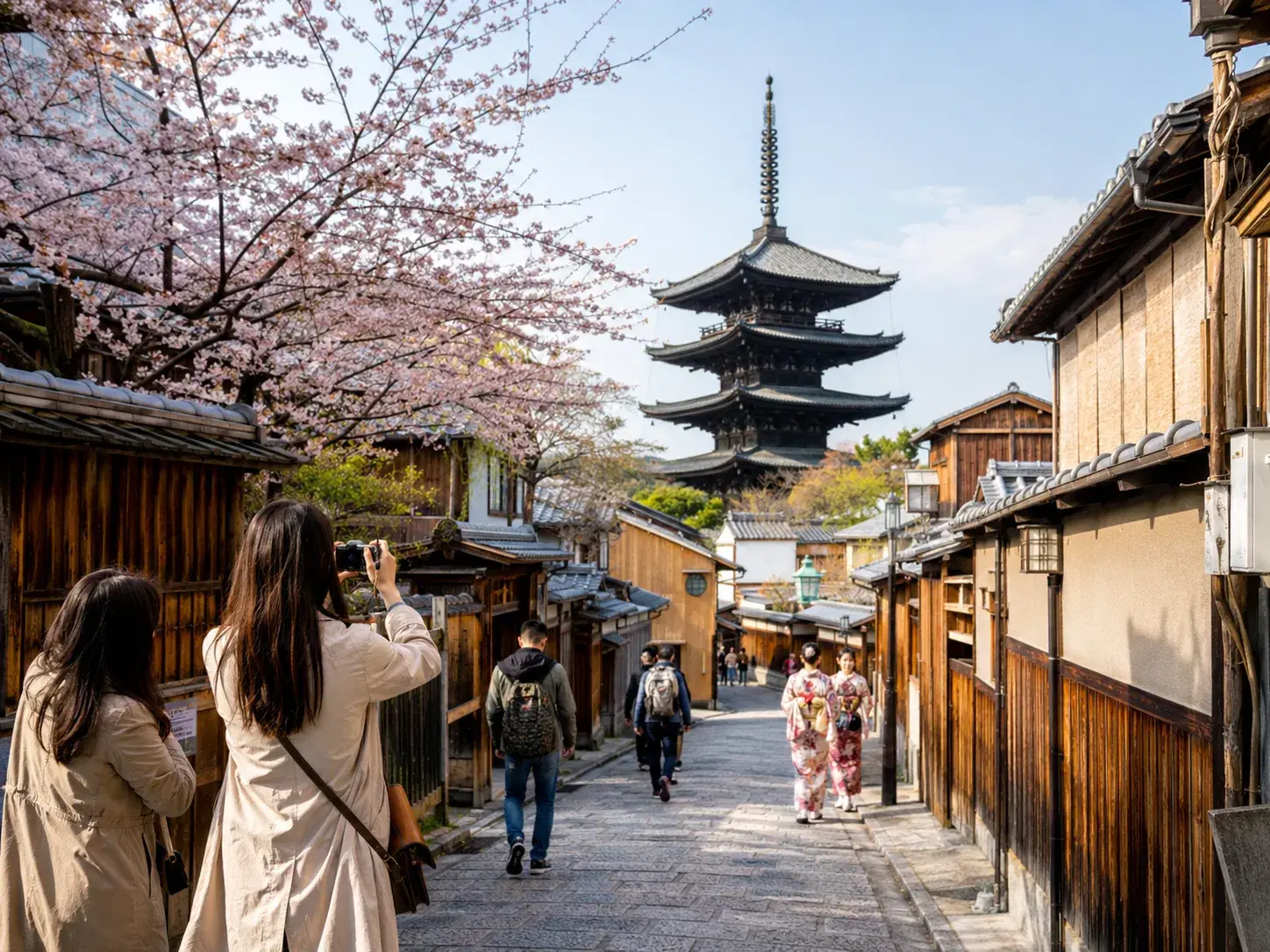
Couple
5 nights · 6 days
Japan · Flexible itinerary
5N/6D Japan Honeymoon Package
Starting from
₹1,35,000/ person
Japan honeymoon packages from India are land-only holiday itineraries built for couples, combining city stays, hot-spring towns and national-park scenery at an unhurried pace. They suit couples who want privacy, quiet mornings and a mix of food, rail travel and nature rather than a beach-only break. Spring, from late March to early May, and autumn, from September to early December, are the most comfortable windows. Packages start at Rs.1,35,000 per person, land only, so compare the inclusions before you book.
Japan gives couples privacy without isolation. A room in a hot-spring town in northeastern Honshu lets you keep to yourselves, and national-park travel in that region pairs outdoor walks with onsen soaks. The pace is yours to set: a single-city trip can take 3 to 4 days, major-city itineraries generally take about one week, and regional trips run two weeks or longer.
Rail travel keeps the two of you self-sufficient. You can move between a city, a hot-spring town and a hiking area without a car, and the day stays flexible. Food is another reason couples choose this route, since small counters, seasonal menus and regional specialities are easy to build into an evening.
The honest limit is weather. The rainy season runs from early June to mid-July across much of mainland Japan, September carries the highest typhoon risk, and mid-July to August is hot and humid. New Year, Golden Week and Obon bring crowded transport, higher prices and limited accommodation, so plan around these windows rather than through them.
Each of these places suits a different part of the day, so build your plans around the time of day that works best for each one.
If you would rather keep the first trip simple, a Japan tour packages route through the main cities is a good base to build on later.
Room type matters more than star rating on this trip. Look for a room with a private outlook, a quiet floor and, in hot-spring towns, an in-room or private bath option. Privacy usually means fewer neighbours and a separate entrance rather than a larger room.
Access is the second filter. A stay within walking distance of a station or a trailhead saves time on short trips. On longer regional routes, one night in a smaller property between cities breaks up the travel. Confirm what each room category includes at booking, since private baths and meal plans vary by property.
Three or four fixed points give a honeymoon its shape without filling every hour. A first morning at a hot-spring town, before breakfast, is the quietest part of the day. A sunset from a national-park viewpoint such as Mikaeri Pass works when the weather is clear. A private dinner arranged through your stay suits an anniversary or a first evening in a new city. A half-day on the water in the Kerama Islands gives you a shared activity in the middle of the trip.
Match the route to the time you have. Short trips work best as one base with day trips, while longer routes can add a hot-spring town and a national park.
| Nights | Route in words | Who it suits |
|---|---|---|
| 4 to 5 nights | One major city with day trips | Couples with limited leave who want a first taste |
| 7 to 8 nights | Two major cities plus a hot-spring town | Couples who want city time and one slow stop |
| 10 to 12 nights | Major cities, a hot-spring town and a national-park area | Couples who want nature days and rail travel |
| 14 nights or more | Regional route including Hokkaido or Okinawa | Couples with flexible dates and a slower pace |
Japan honeymoon packages start at Rs.1,35,000 per person, land only, and that figure is indicative. It covers the land arrangements in the itinerary, not flights. Moving up a band usually adds better room categories, more private transfers, a night in a hot-spring town and longer stays in national-park areas.
What drives the cost for two is season, nights and room type. Spring and autumn sit at peak demand, while January, February, June and December are lower. Confirm at booking what each band includes, since meal plans and private baths change the total.
Spring and autumn are the strongest windows for this trip. The table below covers only the months that change the experience most.
| Month or season | What it means for this trip |
|---|---|
| March to early May | Mild weather and cherry blossoms, with high demand around late March to early May |
| June to mid-July | Rainy and humid across much of mainland Japan; Hokkaido largely escapes it |
| Mid-July to August | Hot and humid, with festivals and more domestic travel |
| September | Typhoon risk is highest this month |
| October | Cooler and drier, with medium crowds and prices |
| November | Foliage develops, with high crowds and prices |
| December to February | Cold and generally dry, with lower demand outside New Year |
For a quieter trip, January, February and June keep prices low and crowds thin. Check current schedules and prices before you lock dates.
Share your dates and the moments that matter most, and we will shape the stays and pace around them.