
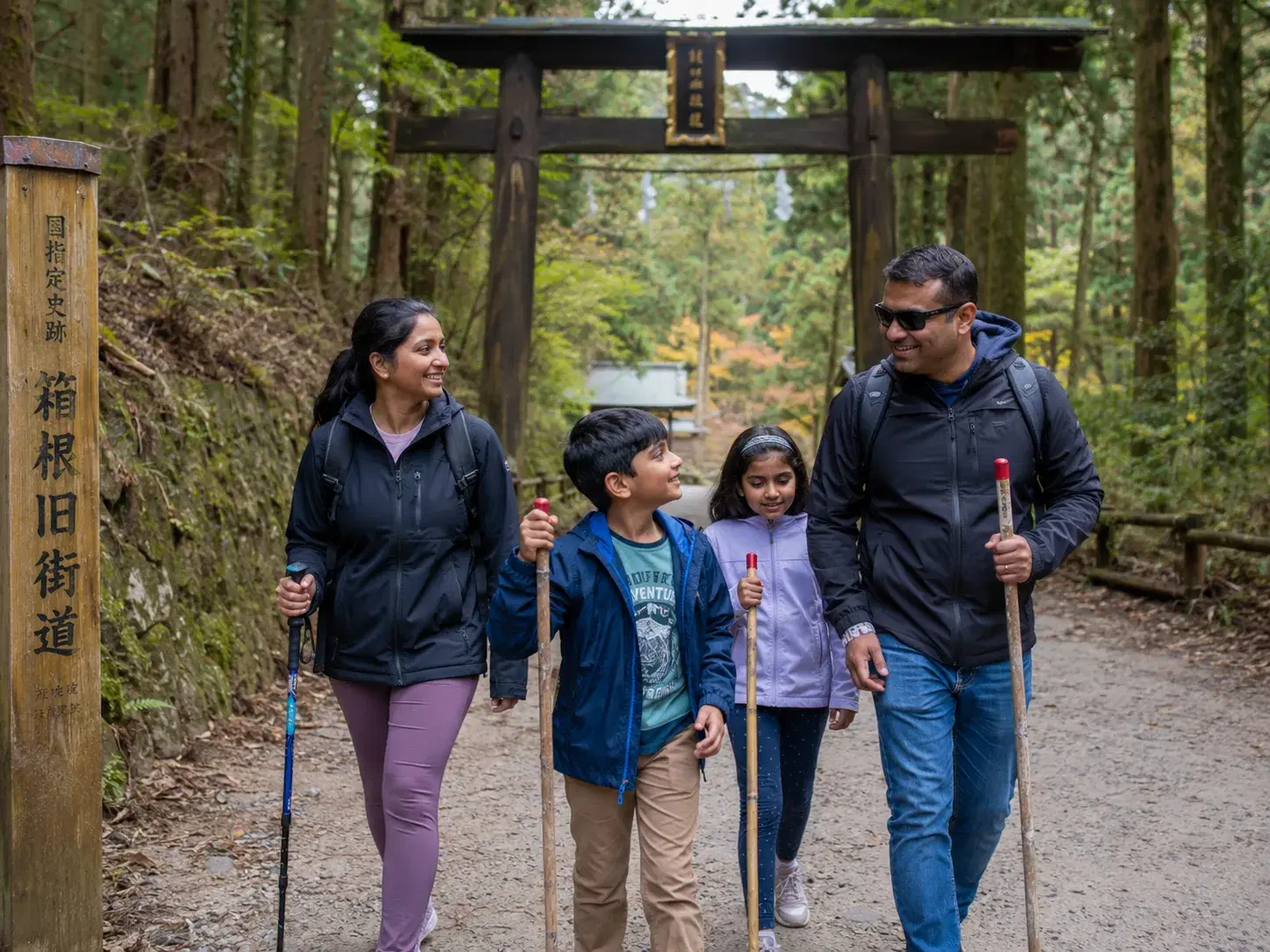
Adventure
5 nights · 6 days
Japan · Flexible itinerary
5N/6D Japan Adventure Package
Starting from
₹1,40,000/ person
Japan adventure packages from India are guided international holidays built around national-park hiking, island trekking, kayaking and forest trails, with time spent in regional areas rather than city sightseeing alone. They suit travellers who can walk for several hours on uneven ground and want a route planned around terrain, weather and safety. Spring and autumn are the most dependable seasons for this style of travel.
Japan adventure packages from India are most worthwhile for active adults who are comfortable on steady, sometimes steep trails. Expect forest, waterfall, volcanic and high-mountain routes on the mainland, trekking on the Hokkaido islands, and island kayaking in Okinawa. A single-city trip runs three to four days, a major-city itinerary about a week, and regional routes two weeks or longer. Land-only trips start at Rs.1,35,000 per person in 2026, with activity fees confirmed at booking.
Japan suits reasonably fit travellers who are comfortable walking four to six hours a day, often with elevation gain. Most national-park trails do not need technical climbing skills, but you do need steady footing on tree roots, loose volcanic gravel and wet boardwalks.
Minimum age and health declarations depend on the activity and the operator, so confirm them at booking. Choose an easier version if you are new to hill walking, travelling with children, or managing knee or back problems. Easier versions stick to valley trails, shorter loops and kayaking on calm water. Travellers who want summit days should build fitness for at least two months before departure.
If you are still comparing regions before choosing a route, the Japan tour packages hub shows how the country is usually split for Indian travellers.
Effort varies more than most people expect. Island trekking in Hokkaido is the hardest part of any Japan adventure itinerary, while national-park day walks and kayaking are manageable for most active adults.
| Activity | Effort level | Season |
|---|---|---|
| Rishiri and Rebun trekking | Moderate to demanding | Summer, confirm at booking |
| Kerama Islands kayaking | Easy to moderate | Warm months, confirm at booking |
| Oirase hiking | Easy | Spring to autumn |
| Mount Hachimantai summit routes | Moderate | Summer to early autumn |
| Mikaeri Pass, Tamoyachi, Goshougake | Moderate | Summer to early autumn |
Weather cut-offs are real. Typhoon risk is elevated in September, the rainy season runs from early June to mid-July, and mid-July to August is hot and humid. Trails can close after heavy rain. Confirm at booking the operator's safety standards, whether guides are certified, group sizes, and whether the guide carries first-aid and communication equipment.
A typical guided activity day starts early with a safety briefing covering the route, turnaround time, weather signs and what to do if the group splits. Your guide checks footwear and rain gear before you set off, because trail conditions decide the plan.
Expect four to six hours on the move, including breaks, on a national-park trail or a kayaking session. Kayaking days include paddling instruction and a buoyancy aid, and stay close to shore if conditions change. Groups turn back if wind, visibility or rain crosses the operator's cut-off, and that decision is final. Confirm at booking whether trailhead transport, lunch and equipment are included in the activity fee.
Route length should match your fitness, not just the days you have free. These are the shapes that work well for Indian travellers, with nights counted on the ground in Japan.
| Nights | Route in words | Effort |
|---|---|---|
| 7 to 8 nights | One major city plus a national-park hiking area such as Towada-Hachimantai | Easy to moderate |
| 9 to 11 nights | City arrival, northern Honshu hiking days, then a second city | Moderate |
| 12 to 14 nights | Hokkaido trekking on Rishiri and Rebun with mainland hiking | Moderate to demanding |
| 12 to 14 nights | Okinawa kayaking in Keramashoto National Park plus mainland trails | Easy to moderate |
Bring broken-in walking shoes, a rain shell, layers, a refillable bottle and any personal medication. Operators usually provide kayaks, paddles and buoyancy aids and, on guided hikes, navigation and safety equipment. Trekking poles and gaiters are sometimes available on request.
Permits, park rules, age limits and health declarations vary by activity and region, so confirm them at booking rather than assuming. Some trails and campsites need advance registration, and island ferries can sell out in peak weeks. Carry your passport, keep some cash for small transport payments, and follow local rules on trails, hot springs and waste. Check the official park source for any current notice before you travel.
Land-only trips on this theme start at Rs.1,35,000 per person, an indicative figure that depends on season, route length and how many guided activity days you add. Peak periods such as cherry-blossom weeks, Golden Week, Obon and New Year push accommodation and transport costs up sharply.
Activity fees, guide charges, equipment rental and any park or ferry payments are confirmed at booking, because they change with the operator and the month. Domestic transport inside Japan and meals outside the inclusions are usually the two items that move your final Japan trip cost the most.
Spring and autumn give the most usable trail conditions. Summer suits Hokkaido trekking and Okinawa water activities, but mainland heat and humidity make long hikes harder than the distance suggests.
| Period | What it means for this trip |
|---|---|
| April to May | Mild temperatures and high demand; book trails and stays early |
| June to mid-July | Rainy season on the mainland; Hokkaido largely escapes it |
| Mid-July to August | Hot and humid; best suited to Hokkaido and early starts |
| September | Typhoon risk is highest; keep buffer days |
| October to early December | Cooler walking weather, foliage crowds and medium prices |
For general planning around these windows, our Japan holiday options are grouped by season and region.
Tell us your fitness level, experience and dates and we will confirm the right route and difficulty.