Package overview
The thinking behind this journey.
A closer look at this 7-night journey through Croatia— who it's built for, what you'll experience, and why the pace works.
Journey notes
Why this route works
What is a Croatia beach package?
A Croatia beach package is a pre-planned international holiday that combines Adriatic coastal stays with old-town sightseeing, road or sea transfers and free swimming time. On this trip you travel from Split to Dubrovnik and Babin Kuk, then north to Zadar and Rovinj, with two beach-led days and one island outing from Split.
| Trip detail | This itinerary |
|---|---|
| Length | 7 nights, 8 days |
| Route | Split, Dubrovnik and Babin Kuk, Zadar stop, Rovinj |
| Price | Rs.99,000 per person, twin sharing, land only |
| Hotel category | Standard 3-4 star |
| Best months | Late May to early October |
| Suited to | Couples from India |
Sea, sand and conditions along the route
The beaches on this route are mostly pebble or rock-entry coves rather than long sandy stretches, so swim shoes are useful. The sea is warmest in July and August and still comfortable in June and September, while May and October feel cooler in the water.
Split gives you city beach access close to the old town, Babin Kuk has pebble beaches about 15 minutes from Dubrovnik Old Town, and Rovinj has rocky and forest-park shoreline for swimming and loungers. Beach conditions change with wind, so ask your hotel about the calmer side of the coast on the day. Swim in marked areas, avoid cliff jumping and keep to the sheltered side of the bay if the breeze picks up.
Why this route suits couples
This route suits couples because most evenings are spent in walkable old towns rather than in transit, and the longer drives are spaced out with a light day after each one.
- Setting: Babin Kuk is a quieter, greener peninsula, so evenings feel calmer than inside the busy walls of Dubrovnik Old Town.
- Pace: Mornings are for sightseeing while it is cooler, and afternoons are open for swimming or rest, with at least two late starts built in.
- Contrast: Rovinj is associated with food and upscale resort stays, which gives you one indulgent final stop after the sightseeing days.
Romantic highlights
These are the moments on this route that couples usually remember most.
- Split Riva at sunset: a waterfront promenade walk beside Diocletian's Palace on arrival evening, with dinner at a konoba nearby.
- Island day from Split: a ferry or catamaran to Hvar or Brac for a harbour lunch and a swim at a pebble beach.
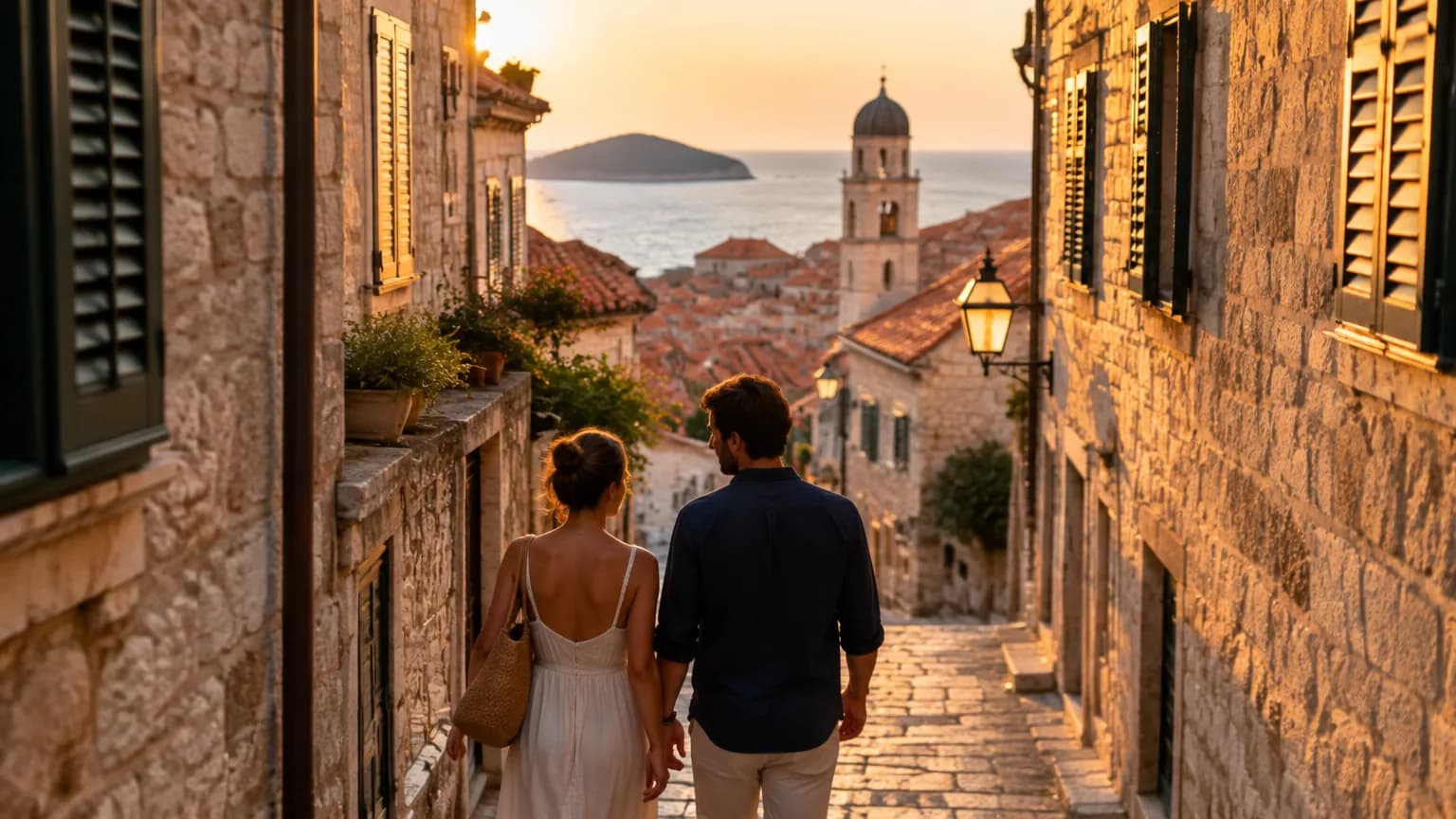
- Dubrovnik city walls: a walk above Stradun and the red rooftops with your guide, best done in the cooler morning.
- Srd cable car: an optional ride above Dubrovnik for sea and old-town views, timed for late afternoon light.
- Zadar sea organ: a short stop on the drive north, where waves play sound through steps on the waterfront.
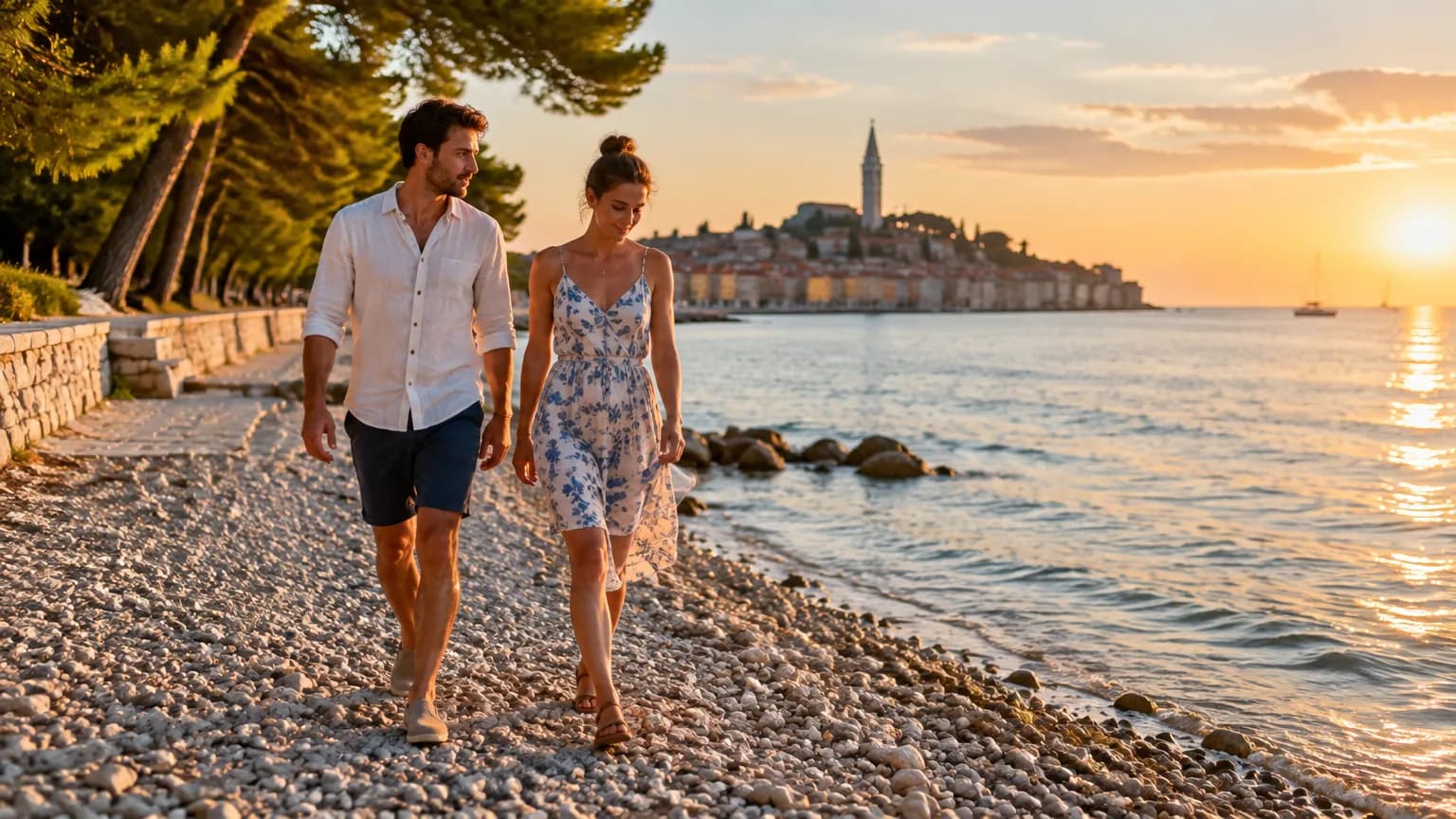
- Rovinj harbour at dusk: a climb to St Euphemia's church, then a table in the old town overlooking the water.
How the days flow
Days follow a simple pattern: sightseeing in the morning, free beach or rest time after lunch, and dinner by the water in the evening.
Days 1 and 8 are light because of arrival and departure. Day 4 is a road transfer south and Day 6 is the longest drive north, so both keep the evening open. Sunset slots are kept free in Split and Rovinj. If you prefer later starts, tell us at booking and we will shift guided walks to mid-morning.
Choosing the right stay style
For couples, three things matter more than star rating: whether the room has a sea view, how private the setting feels, and how far you are from the beach and old town.
A sea-facing room on a peninsula such as Babin Kuk costs more than a city-centre room, but it changes the evening. In Split and Rovinj, a hotel inside or beside the old town lets you walk to dinner. Ask for a higher floor, a balcony and a quiet side of the building. Specific hotels are confirmed at booking, based on dates and availability.
Best months for a couple's trip
June and September are the best months for most couples, with warm sea temperatures, medium crowds and medium prices. July and August are the warmest and busiest, with peak prices and a risk of heatwaves.
| Month | Temperature | Crowds and prices | Beach fit |
|---|---|---|---|
| May | 10-22 C | Medium | Sightseeing first, cooler water |
| June | 13-25 C | Medium | Very good |
| July-August | 15-28 C | High, peak prices | Warmest water, hot afternoons |
| September | 12-24 C | Medium | Very good |
| October | 7-17 C | Medium | Cool, limited swimming |
Ferry schedules and island businesses reduce activity from autumn into winter, so a beach-led trip works best between late May and early October. Our guide to the best time to visit Croatia goes month by month.
Add-ons worth considering
Add-ons are optional and are priced separately at booking. These fit this route best.
- Private dinner: best in Rovinj or Dubrovnik on a free evening, with a harbour or sea-view table.
- Couple's spa session: useful after the Day 4 drive, or on the rest afternoon in Babin Kuk.
- Photographer: a one-hour shoot works well at Dubrovnik walls in the morning or on Rovinj harbour at dusk.
- Boat cruise: a private or small-group sailing from Split or Dubrovnik, fitted into a free afternoon.
Where you will sleep: stay categories and price tiers
The listed price of Rs.99,000 per person is for standard 3-4 star hotels on twin sharing. Indicative tiers, per person and subject to dates, are below.
| Stay tier | Indicative price per person | What it usually means |
|---|---|---|
| Budget 3-star | Approx Rs.74,500 | Simple, well-located rooms, fewer sea views |
| Standard 4-star (this package) | Rs.99,000 | Comfortable rooms, a mix of city and coast settings |
| Premium 5-star | Approx Rs.1,58,500 | Larger rooms, sea-view and resort-style stays |
Split and Rovinj stays are in or near the historic centres, and Babin Kuk is a peninsula base with pebble beaches. Final properties are confirmed at booking.
What this Croatia trip costs beyond the package
The package covers land arrangements only, so budget separately for flights, tourist tax and meals outside the plan. For two travellers, the total is the per-person price multiplied by two, plus flights; confirm current prices at booking. Tourist tax is about €1.90-2.65 per person per night from 1 April to 30 September, and €1.40-1.85 in October, as of 2026, and rates vary by destination.
Local transport is moderate: Split-Dubrovnik buses cost about €15-22, a Split-Brac ferry about €5 for a foot passenger, and a Split-Hvar catamaran about €25. Peak-season ferry surcharges are reported, so confirm at booking. See our Croatia trip cost guide for a fuller breakdown.
Entry, money and flights for Indian travellers
Indian passport holders need a Schengen visa for Croatia, applied for through the official application route for Croatia. Check the official portal for the current fee and processing time, and read our Croatia visa for Indians page for documents. Croatia uses the euro, so carry a card and a small amount of cash for cafes and markets. Flights from major Indian cities usually need one connection, with total journey time depending on the route. Split Airport (SPU) and Zagreb Airport (ZAG) are the main entry points, and fares are confirmed at booking.
Croatia travel tips
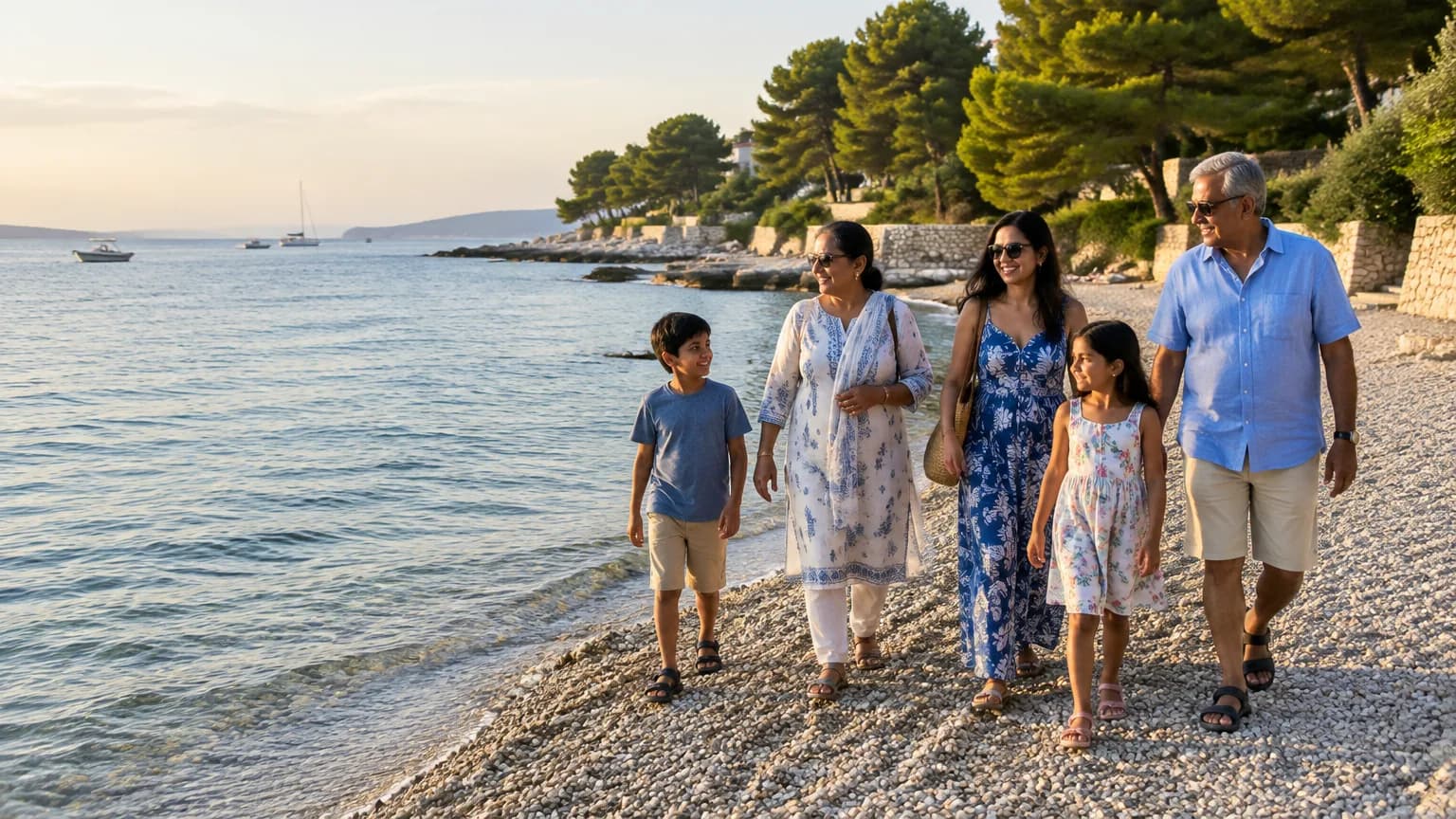
Book ferries and catamarans early for July and August, since peak sailings fill up. Carry a light jacket for evenings even in summer, and swim shoes for pebble beaches. If a longer family trip is on your mind, our Croatia Babin Kuk Family Holiday outline shows a slower coastal pace.
Send us your dates and a few preferences and we will turn this outline into a quote built around you.