
Field notes
Lakshadweep Packing List for Indians 2026
The Lakshadweep packing list for Indians turns on two things: a tropical climate that moves from dry and warm to heavy monsoon rain, and days spent in lagoons, on boats and in the water. Swimwear, reef-safe sun protection and a light rain shell are the three items travellers most often leave behind.
What the weather in Lakshadweep demands
Lakshadweep runs on two broad seasons. The dry season from October to May is generally pleasant, with March and April warmer and April and May the hottest months. The southwest monsoon from June to September brings heavy rain at its peak and rougher seas, and ship-based tourism is closed during the monsoon.
Temperature barely moves across the year. January sits around 22-30 C, March around 24-32 C, April around 25-34 C, and the monsoon months hold 26-35 C. What changes is rain and sea state, so layers are less about warmth and more about staying dry and covered.
| Season | Temperature | Rain | What it means for packing |
|---|---|---|---|
| January-February | 22-30 C | Low | Light cottons and one warm layer for boat rides |
| March | 24-32 C | Low | Extra sun protection and breathable fabrics |
| April-May | 25-34 C | Low | Hottest stretch, so loose clothing and a wide-brim hat |
| June-August | 26-35 C | Heavy | Rain shell, dry bag and quick-dry clothing |
| September | 26-34 C | Moderate | Rain shell plus sun protection |
| October | 27-32 C | Moderate | Mixed kit and a light rain cover |
| November-December | 27-32 C | Low | Standard beach kit and a light layer for evenings |
Humidity stays high through the year, so cotton and linen dry faster than heavy denim. Salt air and repeated washing shorten the life of delicate fabrics, which is worth remembering before you pack anything expensive. A small pack of laundry detergent or a few spare clothes pegs can save you a wet bag of damp kit later in the trip.
Wind also changes with the season. During the monsoon, the sea can be rough enough to cancel or delay boat trips for a day or more. Pack one spare outfit in your hand luggage so a delayed transfer does not leave you in wet clothes for the rest of the day. In the dry months, the afternoon sun is strong enough that even a short walk on open sand calls for a hat and sunscreen.
Essentials checklist
Documents, chargers and medicines form the base of any Lakshadweep packing checklist, because island shops may not stock them. Keep them together in one pouch that stays in your day bag, and check each item twice before you leave home.
- Government photo ID for every traveller, including children
- Permit or entry approval paperwork, printed and saved on the phone
- Confirmed travel and stay vouchers
- Phone charger, power bank and a spare charging cable
- Universal adapter only if your devices need one
- Prescription medicines in original strips with the prescription
- Basic kit: paracetamol, ORS, antacid, antiseptic cream and bandages
- Motion sickness tablets for boat transfers
- Mosquito repellent and after-bite cream
- Toothbrush, toothpaste, soap and shampoo in small bottles
- Sunscreen, lip balm with SPF and sunglasses
- Reusable water bottle
- Small dry bag or waterproof pouch for phone and wallet
- Cash and a card, since ATMs on smaller islands are limited
Carry a photocopy or phone photo of every document separately from the original. If a bag is delayed on a boat transfer, the copies still help you check in. Keep a written list of phone numbers for your stay and your transport contact, because mobile coverage can be patchy on the quieter islands.
Charge everything fully the night before you travel. Power is not always reliable on smaller islands, and a power bank with at least one full phone charge in it is more useful than a second cable. Store your medicines in a sealed zip bag so that a bumpy boat ride or a damp hold does not spoil the packaging or the labels.
Clothing and footwear by season
Pack light, quick-dry clothing and one pair of shoes that can get wet. Lakshadweep clothes should cover beach time, boat rides and village visits without weighing down your bag. A simple rule works well: if an item takes more than a few hours to dry in humid air, leave it at home.
Dry season, October to May
- Two to three sets of swimwear, since drying takes time in humid air
- Loose cotton or linen shirts and shorts for the day
- One smart-casual outfit for dinners or resort evenings
- Light long-sleeve shirt and full-length trousers for village or temple visits
- Wide-brim hat, sunglasses and a scarf or bandana
- One light layer for early boat rides and air-conditioned transfers
- Flip-flops for the beach and sandals with a back strap for walking
Monsoon, June to September
- Quick-dry T-shirts and shorts instead of heavy cotton
- Light rain jacket or poncho that packs small
- Dry bag for electronics, with a spare set of clothes inside
- Closed sandals or water shoes for wet decks and jetties
- Extra plastic bags for wet swimwear and damp clothing
- One warm layer for breezy evenings on the water
Shoulder months, September and October
- A mix of dry-season and monsoon items
- Rain shell plus full sun protection
- Two swimwear sets and one quick-dry towel
Footwear matters more than most people expect. Sand gets hot, jetties turn slippery after rain, and boats need grip. One pair of water shoes and one pair of sandals covers nearly every day. Break in new shoes at home, since a blister on day one can change how much you enjoy the islands.
Choose colours that hide sand and salt marks. Dark or mid-tone quick-dry fabrics look neater after a day on a boat than white cotton, and they need less frequent washing. Two pairs of shorts that you can wear both on the beach and on a village walk will do more work than three specialised outfits.
Gear for activities
Most water gear can be rented on the islands, so carry only what you would rather not share. Scuba diving facilities are available at Kadmat, Kavaratti and Bangaram, and snorkelling is offered in the lagoons.
- Mask and snorkel if you prefer your own fit; fins are usually available on site
- Reef-safe sunscreen, since standard formulas are discouraged in the water
- Rash guard or UV swim shirt for long snorkelling and kayaking sessions
- Waterproof phone pouch with a lanyard
- Action camera with a wrist strap, plus spare batteries
- Quick-dry microfibre towel
- Light gloves if you plan repeated kayaking or canoeing
Windsurfing and water skiing are listed among the available water sports, and glass-bottom boats, kayaks and canoes are part of many island packages. For all of these, a rash guard, a dry bag and a secure strap for glasses or camera are enough. Trekking gear is not needed here, since island walking is flat and short.
Ask your activity provider before you travel whether they supply life jackets and whether they require you to sign a waiver. If you are a confident swimmer, a basic floating vest is still worth carrying for longer kayak runs. Confirm rental availability for diving and water sports at booking, as equipment stock varies between islands and seasons.
For temple and village visits, dress modestly: shoulders and knees covered, and footwear removed before entering. A sarong or light shawl in your day bag handles this without a change of clothes. Carry a small plastic bag for shoes you take off, so sand does not spread through your bag.
If you want to try local food, Minicoy cuisine includes Mus Kavaab and Kilanji. Nothing special needs packing for that, but a small bottle of hand sanitiser is useful before meals.
What to leave at home or buy there
Leave behind anything heavy, formal or single-use. Island travel rewards a small bag, and several everyday items are easy to pick up locally or at your stay.
- Heavy denim, jackets and multiple pairs of shoes
- Full-size toiletries and glass bottles
- Hairdryers and irons, since most stays provide them
- Beach towels, usually supplied by the property
- Snorkelling fins and bulky dive gear, available for rent
- Formal wear and jewellery beyond one simple set
- Large amounts of cash, since safe storage is limited
- A drone, unless you have written permission, as local rules apply
Easy to buy locally or at your stay: bottled water, basic snacks, sunscreen, mosquito repellent and simple cotton clothing. Pharmacy stock on smaller islands is limited, so medicines stay on the carry list rather than the buy list.
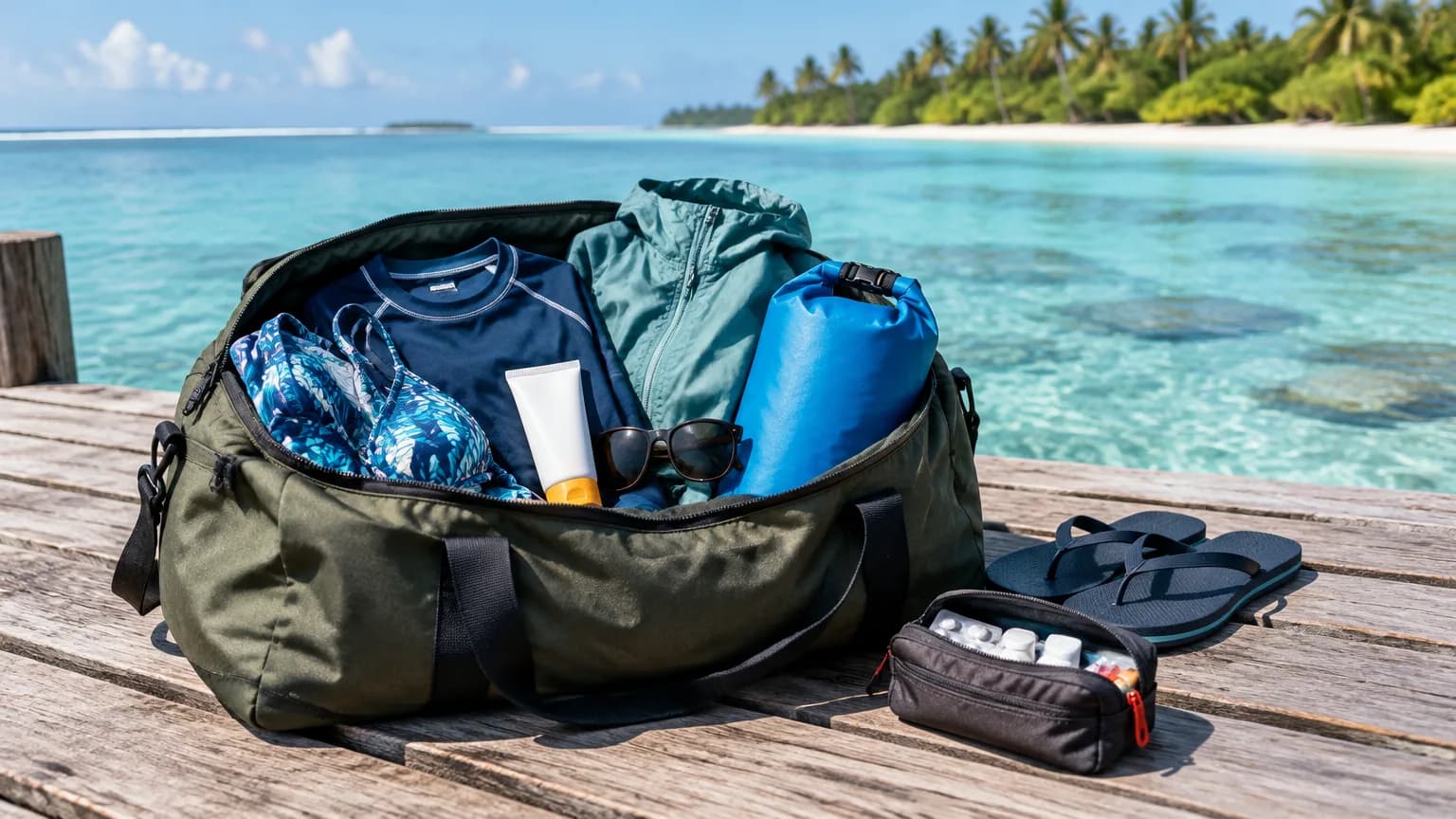
Baggage is the other thing to plan. Inter-island transfers and small aircraft or boat services often have tighter limits than larger services, so confirm the allowance for your specific route at booking. A soft duffel packs into odd spaces better than a hard case, and it squeezes more easily into a boat hold.
Before you leave home, weigh your packed bag on a bathroom scale. Many island transfers check weight rather than size, and it is easier to remove an item at home than at a jetty. Split your kit between a main bag and a small day bag, and keep the day bag light enough to carry on a boat.
When you have settled on dates, the Lakshadweep tour packages page is a good place to see what a full trip includes.