
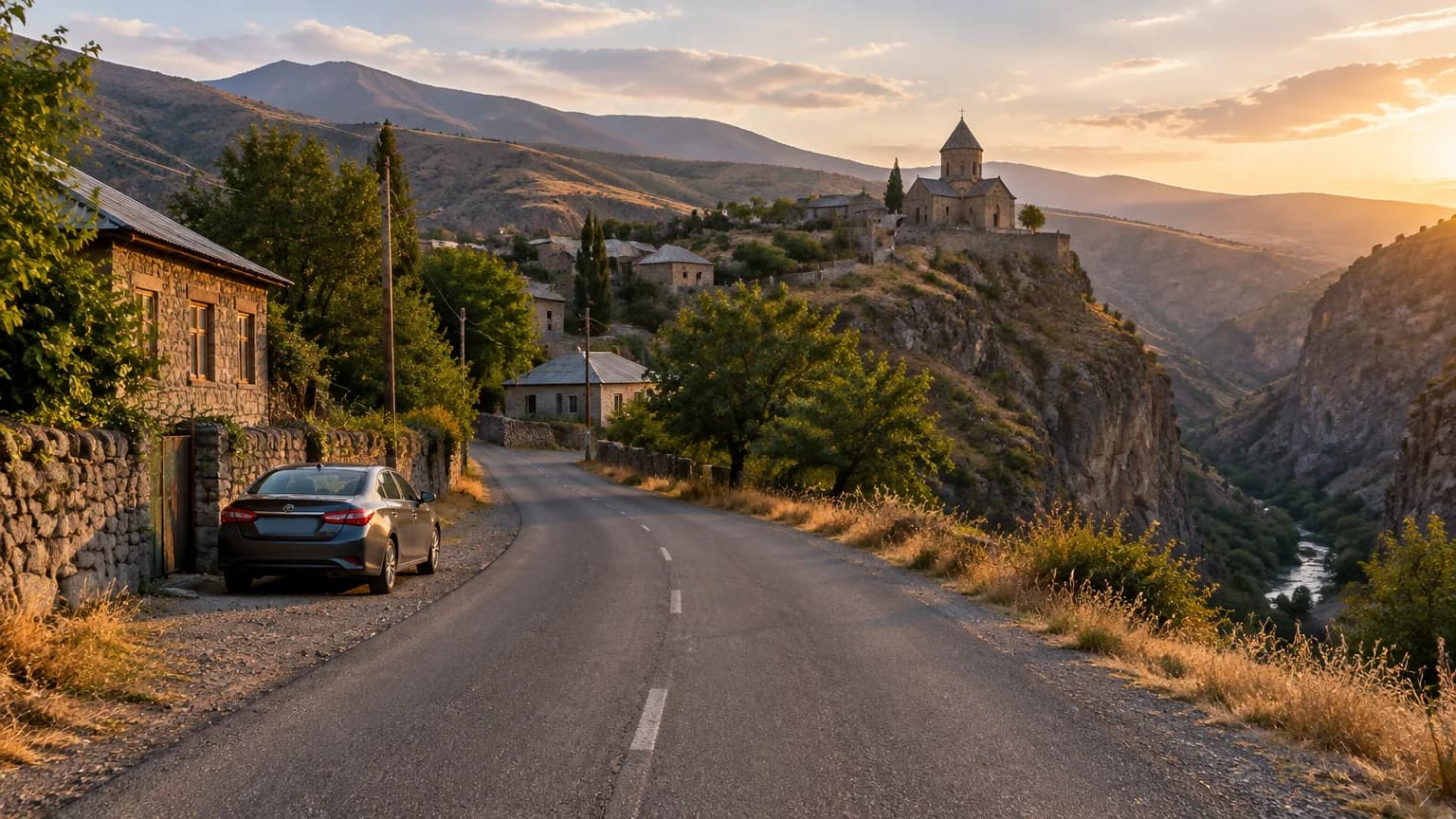
Armenia offbeat experiences for Indians are the places beyond the usual Yerevan, Garni, Geghard and Lake Sevan circuit: Areni's wine valley, Dilijan's forest trails, the Debed canyon villages, Gyumri's old town and the Syunik backroads. They suit travellers with two or three spare days who accept rough roads in exchange for quieter, more local stops.
At a glance: who these detours suit and when to go
The detours in this guide suit second-time visitors, slow travellers, photographers and anyone who wants a quieter Armenia. They add to the main circuit rather than replace it, and each needs a car or a long bus ride.
| Question | Short answer |
|---|---|
| Who they suit | Second-time visitors, photographers, couples, adventure and culture travellers; families with older children for the easier stops |
| Extra days needed | 2 to 3 days for two or three areas; 1 extra night each for Goris and the Debed canyon |
| Best base | Yerevan for day detours; Dilijan for the north and Goris for the south as overnight bases |
| Best season | May, June, September and October for roads and walking; Dilijan and Sevan also work in July and August |
| Main constraint | Public transport stops at highways, so a hired car or driver is usually needed for the last stretch |
July and August are hot on the Ararat plain and in the Syunik lowlands, but cooler around Dilijan and Lake Sevan. From November to March, Gyumri and Dilijan have winter scenery, though some mountain routes and trails become difficult or close. Weekends are busier on the Yerevan to Dilijan and Yerevan to Goris roads, so midweek departures are easier.
Cash is still the default in villages, and mobile signal drops in valleys and gorges. Any wine tasting, cave visit or guided walk is paid locally, so confirm current prices at booking.
One planning habit helps Indian travellers more than any other: decide the direction first. North means Dilijan, Sevan and the Debed canyon. South means Areni, Noravank and Goris. Gyumri sits to the north-west and pairs with either. A trip that picks one direction spends its time at the destination, while a trip that zigzags spends it in the vehicle.
Offbeat places worth the detour
Six lesser-known places in Armenia come up again and again when Indian travellers ask for something beyond the usual circuit. Each sits within a day or two of Yerevan, and each asks for a different kind of effort.
Areni and the Noravank gorge
Areni village sits in the Vayots Dzor wine district, about 90 minutes south of Yerevan on the road towards Goris. Most itineraries treat it as a wine stop, but the village lanes, the Areni cave area and the cliff road to Noravank monastery show a slower rural side. Effort is low: the road is paved up to the gorge turn, and Noravank sits at the end of a short road between red rock walls.
Setting is what makes this stop worth it. Red cliffs close in on both sides of the approach road, and the monastery stands in a small clearing at the top. Early morning light suits photography, and tour groups tend to arrive later in the day. Vegetarian travellers can usually find simple village meals and local fruit in the area, but ask your host before you arrive.
Dilijan and the forest trails
Dilijan is a forested town inside a national park, often called a green escape from Yerevan. What many tours skip are the marked forest trails towards Lake Parz and the older lanes away from the main hotel strip. Effort is medium. The town is reachable by marshrutka or shared taxi from Yerevan, but trailheads need a short taxi or a driver, and paths turn muddy after rain.
Cool air and tree cover feel very different from the dry plains around Yerevan, which makes this a good summer stop when the capital is hot. Wear shoes with grip rather than sandals, and carry water, because shops are thin once you leave the town centre.
Debed canyon villages
The Debed canyon in Lori province runs between Alaverdi and the Georgian border, with the monastery villages of Sanahin and Haghpat on the rim. Most tour buses pass it at speed on the way to Georgia. Effort is high: public transport is thin outside Alaverdi, the road winds along the canyon edge, and some village guesthouses open only seasonally. A car with driver is the practical choice.
Old monastery architecture in villages that still function as villages, with few other visitors, is the reward here. Plan a full day or one night rather than a rushed stop, and tell your driver you want time at each monastery instead of a photo halt.
Goris and the Syunik backroads
Goris is a small town in Syunik province, roughly five to six hours from Yerevan by road, and most visitors see it only as the base for Tatev monastery. Staying a night adds the cave dwellings on the hillside, quiet streets and day drives towards Kapan. Effort is medium to high because the drive is long and roads beyond Goris get rough.
This is a part of Armenia that feels remote and unhurried. It rewards travellers who like long drives, changing landscapes and small-town evenings. It does not suit anyone who dislikes long hours in a vehicle.
Gyumri old town
Gyumri is Armenia's second city, about two hours from Yerevan by bus or shared taxi. The 1988 earthquake and the rebuilding that followed shaped its streets, and the old town has a character very different from Yerevan. Effort is low. Buses and shared transport run regularly and the centre is walkable. It suits a half day or one night, not a long stay.
Architecture, craft workshops and a slower city rhythm are the draw. Gyumri is also the easiest detour on this list for travellers who prefer not to hire a car.
Eastern shore of Lake Sevan
The western shore of Lake Sevan takes the crowds. The eastern side is quieter, with lakeside village guesthouses and flatter roads for cycling and walking. Effort is medium. Some side roads are unpaved and public transport is limited to a few marshrutka routes. Summer is the only reliable season for swimming and long evening walks by the water.
Space and calm, close enough to Yerevan for a long day or a single night, define this stop. Families with children often prefer it because the walking is flat and the pace is easy.
Getting to the offbeat places in Armenia
Yerevan is the hub for every detour here, and a private driver or hired car solves most access problems. Taxis inside Yerevan work through apps such as Yandex Go and GG, while intercity travel uses marshrutkas, regional buses, shared taxis and hired vehicles. Marshrutkas often leave only when full, so morning departures from Yerevan are safer.
| Place | From | Mode | Rough duration | Road or trail condition | Best months |
|---|---|---|---|---|---|
| Areni and Noravank | Yerevan | Marshrutka or car | About 1.5 to 2 hours | Paved; short cliff road to Noravank | April to June, September and October |
| Dilijan forest trails | Yerevan | Marshrutka, shared taxi or car | About 2 hours | Paved highway; forest trails muddy after rain | May to October |
| Debed canyon villages | Yerevan via Alaverdi | Car with driver | About 3.5 to 4 hours | Winding canyon roads; some sections rough | May to October |
| Goris and Syunik | Yerevan | Bus, shared taxi or car | About 5 to 6 hours | Long highway drive; rough beyond Goris | May to early October |
| Gyumri old town | Yerevan | Bus or shared taxi | About 2 hours | Paved throughout | April to November |
| Lake Sevan east shore | Yerevan | Marshrutka or car | About 1.5 hours | Paved main road; unpaved side lanes | June to September |
Durations are rough estimates and depend on traffic, weather and stops, so confirm local details at booking. According to local travel guides, day tours or hired cars are the easiest way to combine nearby sites, and a car with driver is recommended for gorges, reserves and parks where public transport is unreliable.
Rental cars are available in Yerevan, but mountain roads, winter conditions and unfamiliar driving habits make a local driver the safer choice for the Debed canyon and Syunik. Arrange a driver a day in advance, especially in May to October.
What transport costs
Costs are modest compared with the effort. The figures below come from published local travel guides and change with season and fuel, so treat them as a guide and confirm at booking.
| Transport option | Typical cost | Where it applies |
|---|---|---|
| App taxi inside Yerevan | AMD 700 to 1,200 (as of June 2026) | Short city rides, airport and station transfers |
| Marshrutka to Garni | AMD 300 to 600 (as of July 2026) | Main-circuit comparison point |
| Marshrutka to Dilijan | Around AMD 1,000 (as of July 2026) | Dilijan forest trails |
| Marshrutka on intercity routes | AMD 1,000 to 3,000 per route | Longer routes such as Gyumri or Goris |
| Rental car | US$40 to 60 per day | Self-drive for confident drivers |
| Private driver | US$100 or more | Debed canyon, Syunik, multi-stop days |
A private driver costs more than a marshrutka seat, but it removes waiting for a full vehicle and lets you stop at viewpoints. For a group of three or four, splitting a driver is often the better value on the longer routes.
Common access mistakes
- Planning Goris as a same-day return from Yerevan. The drive is five to six hours each way, which leaves little time on the ground.
- Relying on a marshrutka for the last stretch to a monastery or trailhead. Public transport usually stops at the highway.
- Starting late. Marshrutkas leave when full and the best light is early, so aim to leave Yerevan in the morning.
- Assuming one app works everywhere. Ride-hailing apps work in Yerevan but not on village roads, so arrange the return leg before you go.
Which places suit which kind of traveller?
Families, couples, adventure travellers and culture-focused visitors get different value from these detours. Match the effort to the group, not just the distance on the map.
| Traveller type | Best for | Pros | Cons |
|---|---|---|---|
| Families with children | Dilijan, Lake Sevan east shore, Gyumri | Short drives, parks, lake views, walkable town centres | Few child-friendly menus in villages; forest trails need supervision |
| Couples | Areni wine area, Dilijan, Lake Sevan east shore | Quiet guesthouses, vineyard walks, lake sunsets | Some stays are seasonal; evening dining choices are limited |
| Adventure travellers | Debed canyon, Goris and Syunik, Dilijan trails | Ridge walks, canyon roads, remote villages | Long drives, rough roads, limited help if something goes wrong |
| Culture-focused travellers | Gyumri, Debed canyon monasteries, Goris cave dwellings | Architecture, craft workshops, monastery history | Some sites make more sense with a local guide |
Vegetarian travellers from India should expect simpler menus in villages than in Yerevan. Guesthouse hosts can usually prepare vegetarian meals if asked in advance, but this is worth confirming when booking.
Older parents travelling with the group deserve a separate thought. Gyumri, Areni and the Lake Sevan east shore involve little walking and short drives, while the Debed canyon and Goris involve long road days and uneven ground at monasteries. If anyone in the group has knee trouble or gets car-sick on winding roads, choose the easier stops and keep the harder ones for another trip.
Visiting tips for lesser-known Armenia
Cash and mobile signal are the two practical concerns on every detour. Carry enough Armenian dram for a day or two in villages, because ATMs are concentrated in towns and card machines are rare at small guesthouses. A local SIM helps in towns, but signal drops in gorges, forest trails and canyon roads, so download offline maps in Yerevan before you leave.
- Cash: withdraw dram in Yerevan, Gyumri, Dilijan or Goris before heading into villages.
- Signal: expect gaps in canyons and on forest trails; tell your guesthouse your route and expected arrival time.
- Opening times: monasteries generally welcome visitors in daylight, but village wineries and guesthouses may open only when booked, so call ahead.
- Etiquette: dress modestly at active churches, ask before photographing people, and remove shoes where a household expects it. Photography inside church buildings is often restricted.
- Permits: most of these places need no permit, but areas close to the borders with Georgia and Azerbaijan may have restrictions, so confirm at booking or with a local operator.
For travellers from India, carry a mix of dram and a card, and keep copies of your passport and visa documents separate from the originals. Check the official government source for current entry rules before travel.
Small preparations that save a day
- Save your guesthouse address in Armenian script or as a map pin. Village drivers and taxi operators may not read English addresses.
- Carry a power bank. Long drives, offline maps and photographs drain phones faster than city days do.
- Pack a light jacket even in summer. Evenings in Dilijan, Sevan and the Syunik highlands turn cool after sunset.
- Carry basic medicines, water and a few snacks. Shops are sparse on canyon and forest routes, and not every village has a pharmacy.
- Keep small notes for tips, village shops and entry donations, since change can be hard to find outside towns.
Is the effort worth it? Planning the detours
Two or three offbeat stops fit neatly into a week, but not all six. Dilijan and Areni work as easy additions, Goris and the Debed canyon each deserve a dedicated night, and Gyumri suits a short break from Yerevan. Pick one direction rather than crisscrossing the country, and keep the last night in Yerevan before your flight home.
The effort pays off most for travellers who value quiet over checklists. If your group wants many ticks in few days, the main circuit is more efficient. If it wants one slow evening in a village, a forest walk or a monastery with few other visitors, one well-chosen detour is worth the extra hours in the vehicle.
Browse the Armenia holiday packages to see how these choices turn into a bookable trip.