
Field notes
Solo Travel for Indian Women: Safety Tips, Best Destinations, Budget and Visa Guide
Solo travel for Indian women is safe and rewarding with the right preparation. Start with well-connected places like Rishikesh, Pondicherry, or Kerala in India, or Singapore, Japan, Vietnam, Thailand, or Sri Lanka abroad. Book well-reviewed stays, arrive in daylight, and share your live location. Budget ₹15,000–₹40,000 for 5 nights in India or ₹45,000–₹1 lakh for Southeast Asia.
Your trip. Your pace. Your rules.
Solo female travel in India and abroad has moved from a brave exception to a considered choice. More women now plan a solo trip from India to mark a milestone, reset after a demanding year, or see a place entirely on their own terms.
This guide answers the questions you'll actually ask before you go. Where is safest? What will it cost? Which visas do you need? How do you plan a first trip that feels calm rather than overwhelming? You'll find the best solo destinations for Indian women, practical solo travel safety tips, budget tables, a visa overview, a packing list, and a clear step-by-step plan.
If a feeling is already forming, browse international tour packages for ideas, explore ready-made itineraries built for different travel styles, or customize your trip around your dates, budget, and comfort level.
Key Takeaways
Solo travel for Indian women is growing because of rising incomes, remote work, online communities, and simpler visa access across Asia.
Best first domestic destinations: Rishikesh, Pondicherry, Fort Kochi, Varkala, Udaipur, McLeod Ganj, Hampi, Meghalaya, and Sikkim.
Best first international destinations: Vietnam, Thailand, Sri Lanka, Singapore, Japan, Malaysia, Bali, Bhutan, and Georgia.
Safest countries for Indian women solo travel: Singapore and Japan lead for low crime and reliable transport. Bhutan suits travelers who want a calm, guided trip.
Safety comes from preparation: Well-reviewed stays, daylight arrivals, shared live location, offline documents, and trusted transport.
Budget: About ₹15,000–₹40,000 for 5 nights in India, ₹45,000–₹1 lakh for Southeast Asia, and ₹1.5 lakh or more for Japan or Europe.
Visas: Many Asian destinations offer visa-free entry, visa on arrival, or e-visas to Indians. Rules change often, so always check before booking.
Community: Women-only travel groups, social hostels, and walking tours make it easy to find company when you want it.
Why Is Solo Travel Growing Among Indian Women?
Solo travel is growing among Indian women because more women now have the income, independence, and information to plan trips on their own terms. Remote work, easier visas, and online communities have made the first step feel far less daunting.
A few shifts stand out.
Financial independence. More women earn, save, and make their own travel decisions.
Flexible work. Remote and hybrid roles make longer trips and workations possible.
Easier access abroad. Several Asian countries offer visa-free entry, visa on arrival, or e-visas to Indian passport holders.
Visible role models. Women sharing honest stories online show what solo travel actually looks like, including the hard parts.
Better tools. Maps, translation apps, digital payments, and live location sharing make it easier to find your way and stay connected.
There is also something harder to measure. Many women describe their first solo trip as the first time they made every decision for themselves. Where to eat. When to rest. Which street to wander down next.
That quiet confidence often lasts long after the trip ends.
What Are the Best Solo Destinations for Indian Women?
The best solo destinations for Indian women combine good safety records, reliable transport, and a welcoming traveler scene. In India, Rishikesh, Pondicherry, and Kerala are strong first picks. Abroad, Vietnam, Thailand, Sri Lanka, Singapore, and Japan work well for first-time solo travelers.
Best Solo Destinations in India
Start close to home. It builds confidence.
Rishikesh, Uttarakhand: Yoga, cafés, riverside walks, and a large community of solo travelers. It suits a slow, reflective first trip.
Pondicherry, Tamil Nadu: Walkable French Quarter streets, calm beaches, and easy cycling. A gentle introduction to solo travel.
Fort Kochi and Varkala, Kerala: Heritage lanes, art cafés, and cliffside beaches with a relaxed pace.
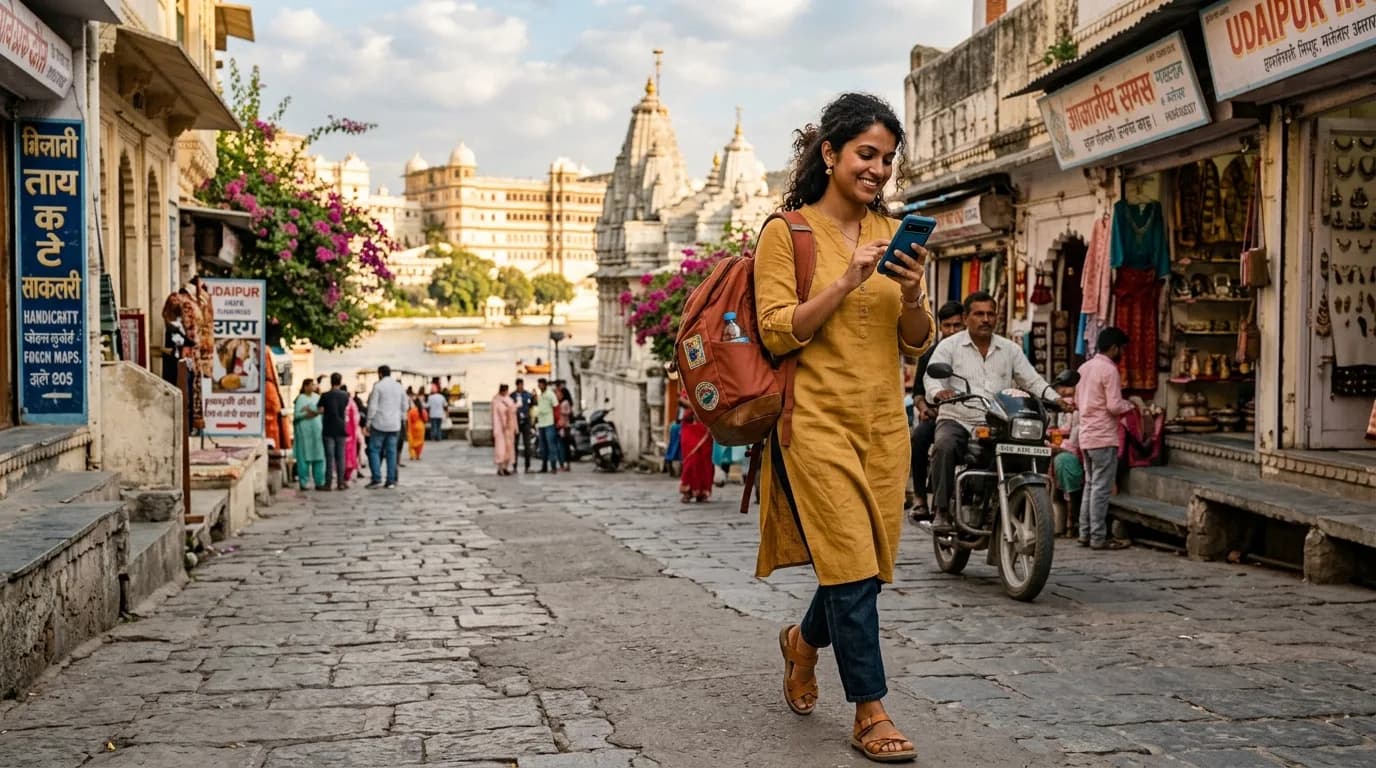
Udaipur, Rajasthan: Lakes, palaces, and rooftop cafés, with many family-run heritage stays.
McLeod Ganj and Dharamkot, Himachal Pradesh: Mountain trails, Tibetan culture, and a friendly backpacker scene.
Hampi, Karnataka: Boulder landscapes and ancient ruins, best explored by bicycle or with a local guide.
Meghalaya: Living root bridges, waterfalls, and a strong local culture. Shillong makes a comfortable base.
Sikkim: Clean, calm, and well organized, with homestays that feel personal and safe.
Rishikesh and Pondicherry are better suited to a short first trip with little planning, while Meghalaya and Sikkim work best when you have a week and want nature to lead.
Best International Destinations for Indian Women Traveling Alone Abroad
For Indian women traveling alone abroad, Asia is the natural starting point. Flights are shorter, costs are manageable, and visa rules are often simple.
Vietnam: Affordable, scenic, and easy to explore by train, bus, and domestic flight. Hanoi, Hoi An, and Ho Chi Minh City are well set up for solo travelers. Read the solo travel in Vietnam guide for a deeper plan.
Thailand: A mature tourism scene, good hostels, and plenty of group tours. Chiang Mai is calmer than Bangkok and suits a first trip.
Sri Lanka: Close to home, familiar food, scenic train journeys, and warm guesthouses.
Singapore: Among the safest cities in the world, with excellent public transport. It costs more, but it asks less of you logistically.
Japan: Very safe, very organized, and deeply rewarding. It suits a longer, well-planned trip.
Malaysia: Kuala Lumpur, Penang, and Langkawi offer variety, good food, and easy transport.
Bali, Indonesia: Ubud suits a wellness-led trip, with yoga, cafés, and a large community of solo women.
Bhutan: Calm, clean, and guided. Indians don't need a visa, though a daily Sustainable Development Fee applies.
Georgia: Mountains, wine country, and friendly welcome, with e-visa access for many Indian travelers.
Solo Destinations at a Glance
Destination | Why It Works | Better Suited For | Ideal Length |
|---|---|---|---|
Rishikesh | Wellness scene, solo-friendly cafés | First-timers, slow travelers | 3–5 nights |
Pondicherry | Walkable, calm, easy cycling | Short breaks | 2–4 nights |
Kerala | Heritage, beaches, backwaters | Relaxed, varied trips | 5–7 nights |
Vietnam | Low cost, good transport | Budget and multi-city trips | 6–10 nights |
Thailand | Strong traveler infrastructure | First international trip | 5–8 nights |
Sri Lanka | Close, familiar, scenic | Nature and culture lovers | 6–8 nights |
Singapore | High safety, easy transport | Nervous first-timers | 3–5 nights |
Japan | Very safe, highly organized | Planned, culture-led trips | 8–10 nights |
Singapore and Japan are better suited to travelers who want the most structure and safety, while Vietnam and Thailand work best when you want your budget to stretch across more days and cities.
Which Countries Are Safest for Indian Women Traveling Solo?
Singapore and Japan are widely considered the safest countries for Indian women traveling solo, thanks to low crime, reliable public transport, and well-lit public spaces. Bhutan, Sri Lanka, and Malaysia are also comfortable choices for a first international solo trip.
Safety looks a little different in each place.
Singapore: Strict laws, clean streets, and a metro that runs late. English is widely spoken, which makes asking for help easy.
Japan: Very low crime, punctual trains, and women-only train carriages during rush hour in major cities.
Bhutan: Guided travel is built into the system, so you're rarely without local support.
Sri Lanka: Familiar culture and food, friendly guesthouses, and short flights from South India.
Malaysia: Easy transport, good food, and a strong tourism setup in Kuala Lumpur and Penang.
Vietnam and Thailand: Well-trodden traveler routes with plenty of hostels, tours, and fellow solo women.
Singapore and Japan are better suited to travelers who want to feel at ease from the first hour, while Vietnam and Thailand work best when you're comfortable with a little more independence in exchange for lower costs.
No destination is risk-free. The habits in the next section matter more than any ranking.
Is Solo Travel Safe for Indian Women? Essential Safety Tips
Yes. Solo travel is safe for Indian women who plan carefully and stay aware. Most risks can be reduced with well-reviewed stays, daylight arrivals, trusted transport, shared live location, and offline copies of your documents.
Safety is not about fear. It is about preparation.
Before You Go
Research neighborhoods, not just cities. Choose areas that are central, well lit, and busy in the evening.
Read recent reviews from women. Filter hostel and hotel reviews for solo female travelers when the platform allows it.
Share your itinerary. Send your flights, stays, and daily plans to one or two trusted people.
Save emergency numbers. In India, dial 112 for emergencies and 181 for the women's helpline. Look up local emergency and tourist police numbers for each country you visit.
Register with the Indian embassy. Keep the address and phone number of the nearest Indian mission saved on your phone.
Buy travel insurance. Choose a policy that covers medical care, theft, and trip delays.
On the Ground
Arrive in daylight. Plan your first arrival before dark, so you can find your stay with ease.
Use trusted transport. Pre-book airport transfers or use official ride-hailing apps. Check the number plate before you get in.
Share live location. Keep it on with a trusted contact, especially during transfers and late evenings.
Dress with local context in mind. Carry a scarf or light layer for temples and conservative areas.
Trust your instincts. If something feels wrong, leave. You owe no one an explanation.
Keep your plans private. You don't need to tell strangers where you're staying or that you're alone.
Watch your drink. Order sealed drinks when unsure, and never leave a glass unattended.
Digital Safety
Your phone is your map, translator, wallet, and lifeline. Treat it that way.
Keep documents offline. Save your passport, visa, insurance, and bookings in an offline folder on your phone, with a backup in email or the cloud.
Carry a power bank. A charged phone keeps every other safety habit working.
Buy a local SIM or eSIM. Constant data makes navigation and check-ins much easier.
Split your money. Keep cards and cash in two different places.
Use a VPN on public Wi-Fi. It adds a layer of protection for banking and bookings.
Choosing Safe Stays
Women-only hostel dorms are common across Asia and a good way to meet other travelers.
Boutique hotels and guesthouses with 24-hour reception add a layer of comfort.
Homestays in places like Sikkim, Meghalaya, and Sri Lanka feel personal and well looked after.
Avoid ground-floor rooms when possible, and use the door chain or a portable door lock.
In short: research before you book, stay visible and connected on the ground, and keep every document available offline.
Should Your First Solo Trip Be in India or Abroad?
For most first-timers, a short domestic trip is the gentlest start, since language, money, and logistics are familiar. If you already travel often, a short international trip to Sri Lanka, Thailand, or Singapore is an easy, well-supported next step.
Factor | Solo Trip in India | Solo Trip Abroad |
|---|---|---|
Typical 5-night cost | ₹15,000–₹40,000 | ₹45,000–₹1 lakh (Southeast Asia) |
Planning effort | Low | Moderate (visa, forex, SIM) |
Language and food | Familiar | New, often part of the appeal |
Visa needed | No | Depends on the country |
Better suited for | First trips, short breaks | Confidence-building, new cultures |
A domestic trip is better suited to testing your rhythm with little at stake, while an international trip works best when you're ready for something new and have a little more budget and lead time.
How Much Does a Solo Trip Cost for Indian Women?
A 5-night solo trip within India usually costs ₹15,000–₹40,000. A short international solo trip to Southeast Asia costs about ₹45,000–₹1 lakh, while Japan or Europe typically starts around ₹1.5 lakh. Flights and stays make up most of the cost.
Solo travel has one quiet cost. There is no one to split the room with. Planning around that makes a real difference.
Estimated Solo Trip Costs (5–6 Nights)
The figures below are approximate per-person estimates, including flights or trains, stays, food, local transport, and activities. Prices shift with season, exchange rates, and how early you book.
Destination | Budget | Mid-Range |
|---|---|---|
Rishikesh / Pondicherry | ₹15,000–₹25,000 | ₹30,000–₹45,000 |
Kerala / Himachal | ₹20,000–₹35,000 | ₹40,000–₹60,000 |
Vietnam | ₹45,000–₹60,000 | ₹65,000–₹85,000 |
Thailand | ₹50,000–₹65,000 | ₹70,000–₹95,000 |
Sri Lanka | ₹45,000–₹60,000 | ₹65,000–₹90,000 |
Bali | ₹55,000–₹75,000 | ₹80,000–₹1,10,000 |
Singapore | ₹65,000–₹85,000 | ₹90,000–₹1,30,000 |
Japan | ₹1,30,000–₹1,60,000 | ₹1,70,000–₹2,50,000 |
Vietnam and Sri Lanka are better suited to a first international trip on a tight budget, while Singapore and Japan work best when ease and structure matter more than cost. For affordable starting points, browse international packages under ₹50,000.
Ways to Make Your Solo Budget Go Further
Book flights early. Six to eight weeks ahead often gives better fares on Asian routes.
Mix your stays. Pair a few hostel nights with a boutique hotel for rest and privacy.
Travel in shoulder season. Fewer crowds and lower prices, without major weather trade-offs.
Eat where locals eat. Street food and small family cafés are affordable and often the most memorable meals.
Use public transport. Metros and buses in Singapore, Japan, and Malaysia are efficient and inexpensive.
Track spending daily. A simple expense app keeps a multi-city trip on budget.
Watch for offers. Seasonal travel deals on flights and stays can change which destination makes the most sense.
Rethinking Couple-Focused Packages
Some of the most peaceful places are marketed to couples. Bali, the Maldives, and Sri Lanka appear often in honeymoon packages under ₹1 lakh, and their slow pace, private stays, and scenic settings suit a restful solo trip just as well. Treat these as inspiration, then reshape the stays and activities for one.
Where Should Indian Women Stay When Traveling Solo?
Choose stays with strong recent reviews from women, a central location, and 24-hour reception. Women-only hostel dorms suit social, budget-minded travelers. Boutique hotels and homestays suit travelers who want privacy, rest, and personal attention.
Stay Type | Typical Cost | Better Suited For | What to Check |
|---|---|---|---|
Women-only hostel dorm | Lowest | Budget travelers who want company | Lockers, reviews from women, common areas |
Guesthouse or homestay | Low to moderate | Travelers who value local hosts | Host reviews, location, curfew or gate times |
Boutique hotel | Moderate | Rest, privacy, first nights abroad | 24-hour reception, room floor, transfer options |
Serviced apartment | Moderate | Longer stays and remote work | Wi-Fi speed, building security, kitchen |
Hostels are better suited to travelers who want to meet people and stretch a budget, while boutique hotels work best for your first and last nights, when rest and a calm arrival matter most.
A thoughtful mix often feels right. Social nights in the middle. Quiet, comfortable nights at either end.
What Visas Do Indian Women Need for Solo Trips Abroad?
Most short international solo trips need a passport valid for at least six months, a return ticket, proof of stay, and the right visa or entry permit. Many Asian destinations offer visa-free entry, visa on arrival, or e-visas to Indians, while Japan and Singapore need visas applied for in advance.
Visa Overview for Popular Solo Destinations
Entry rules change often. Use this table as a starting point, not a final answer.
Destination | Typical Entry Type for Indians | Plan Ahead |
|---|---|---|
Thailand | Visa-free for short stays under recent rules | Check current duration limits |
Malaysia | Visa-free for short stays under current arrangements | Complete the digital arrival card |
Sri Lanka | Electronic Travel Authorization (ETA) | Apply online before travel |
Vietnam | E-visa | Apply 1–2 weeks ahead |
Bali, Indonesia | Visa on arrival or e-VOA | Apply online to save time |
Bhutan | No visa; entry permit and daily fee | Book through registered operators |
Nepal | No visa needed | Carry a passport or voter ID |
Singapore | Visa through authorized agents | Apply 2–3 weeks ahead |
Japan | Visa or e-visa through approved channels | Apply 3–4 weeks ahead |
Georgia | E-visa, or visa-free with certain valid visas | Check eligibility first |
Thailand, Malaysia, and Nepal are better suited to last-minute solo trips, while Japan and Singapore work best when you can plan three to four weeks ahead. Before booking flights, check current visa requirements by destination.
Documents to Keep Ready
Passport valid for at least six months beyond your return date
Visa, e-visa, or entry approval
Return or onward flight ticket
Stay confirmations for your full trip
Travel insurance policy
Proof of funds, such as a recent bank statement or card
Two printed passport copies, stored separately from the original
What Should Indian Women Pack for a Solo Trip?
Pack light, versatile clothing, a scarf for modest settings, a first-aid kit, a power bank, a universal adapter, and offline copies of every document. A small daypack and an anti-theft bag make solo days easier.
Travel light. Move freely.
Clothing
Breathable cotton and linen layers
One or two modest outfits for temples and religious sites
A lightweight scarf or stole
A light jacket or fleece for flights and cool evenings
Comfortable walking shoes and one pair of sandals
Swimwear, if your destination calls for it
Safety and Health
Personal medicines, with prescriptions
A small first-aid kit with pain relief, ORS, antiseptic, and plasters
Sanitary products or a menstrual cup, since preferred brands may be hard to find
Sunscreen, insect repellent, and hand sanitizer
A portable door lock or door stopper alarm
A whistle or personal safety alarm
Tech and Documents
Phone, charger, and a power bank
Universal travel adapter
Offline copies of your passport, visa, tickets, and insurance
Two printed passport copies and a few passport photos
A debit card and a forex card, stored separately
Earphones for long journeys
Small Things That Help
An anti-theft crossbody bag
A reusable water bottle
A small padlock for hostel lockers
A sleep mask and earplugs
A notebook for addresses and moments worth remembering
How Do You Plan Your First Solo Trip as an Indian Woman? (Step by Step)
Plan your first solo trip in seven steps: name what you want from the trip, start with a short and familiar destination, set your budget, sort visas and documents, book your first and last nights, share your plans, and travel with a backup contact.
Every solo traveler started somewhere. Here is a gentle way to begin.
Time needed to plan: 2–6 weeks, depending on visas
What you'll need: Passport, budget, travel insurance, a charged phone with offline documents
Name the feeling. Rest. Adventure. Culture. Celebration. Decide what this trip should give you, and let that guide every choice after it.
Start close. Choose a 3–4 night trip within India, or a short hop to Sri Lanka, Thailand, or Singapore. You test your rhythm without much at stake.
Set your budget. Use the cost table above to pick a realistic range, then add a 10–15% buffer for surprises.
Choose your comfort level. Decide between full independence, a mix of solo days and group tours, or a fully planned trip with local support.
Sort visas and documents. Check entry rules, apply early where needed, buy insurance, and save every document offline.
Book your first and last nights. Your arrival and departure are the moments you want settled. Leave the middle flexible for places you fall for.
Shape the route. Pick one or two bases and move in one direction to cut backtracking and transit time.
Share your plans. Send your itinerary and stay details to one or two trusted people, and turn on live location for transfers.
Travel with backup. Know who you can reach if a flight is cancelled or a booking falls through. Your stay's reception, local contacts, and a trusted planner can all help.
Reflect and go again. Notice what felt easy and what didn't. Your second trip will feel lighter than your first.
Built to be changed. Browse ready-made itineraries as a starting point, then adjust the pace, stays, and route to suit you.
Where Can Indian Women Find Solo Travel Communities?
Indian women can find solo travel communities in women-only travel groups, online forums, social media groups, hostels, and walking tours. These spaces make it easy to share tips, find company for a day, or simply feel less alone on the road.
Alone does not mean lonely.
Women-only travel clubs. Groups such as Women on organize trips for women in India and abroad. They suit a first trip if you want structure with like-minded company.
Online groups. Facebook groups like Host A Sister connect women travelers for advice, meetups, and local tips around the world.
Hostels with common spaces. Social hostels in Vietnam, Thailand, and Sri Lanka host dinners, tours, and events that make meeting people easy.
Free walking tours. Many cities offer tip-based walking tours, a relaxed way to meet other travelers.
Day tours and classes. Cooking classes, yoga sessions, and snorkeling trips bring people together naturally.
Coworking spaces. If you're working remotely, coworking cafés in Bali, Chiang Mai, and Goa build instant community.
Women-only clubs are better suited to first-timers who want company from day one, while hostels and walking tours work best when you want independence with the option of company.
A thoughtful habit: join a group before you leave. Ask questions. Read recent posts about your destination. You'll arrive already knowing someone.
What Mistakes Should First-Time Solo Travelers Avoid?
The most common first-trip mistakes are overpacking the itinerary, arriving late at night, relying on a single card, and skipping travel insurance. Each one is simple to avoid with a little planning.
Too many cities, too few days. Two bases in five nights is plenty for a first trip.
Late-night arrivals. Choose flights that land in daylight, or pre-book a transfer.
One card, one phone, no backup. Carry two cards, some cash, and a power bank.
Documents only online. Save everything offline before you leave home.
Skipping insurance. A single medical visit abroad can cost more than a full policy.
Saying yes out of politeness. You can decline any invitation, tour, or ride without a reason.