
Adventure
6 nights · 7 days
Uttarakhand · Flexible itinerary
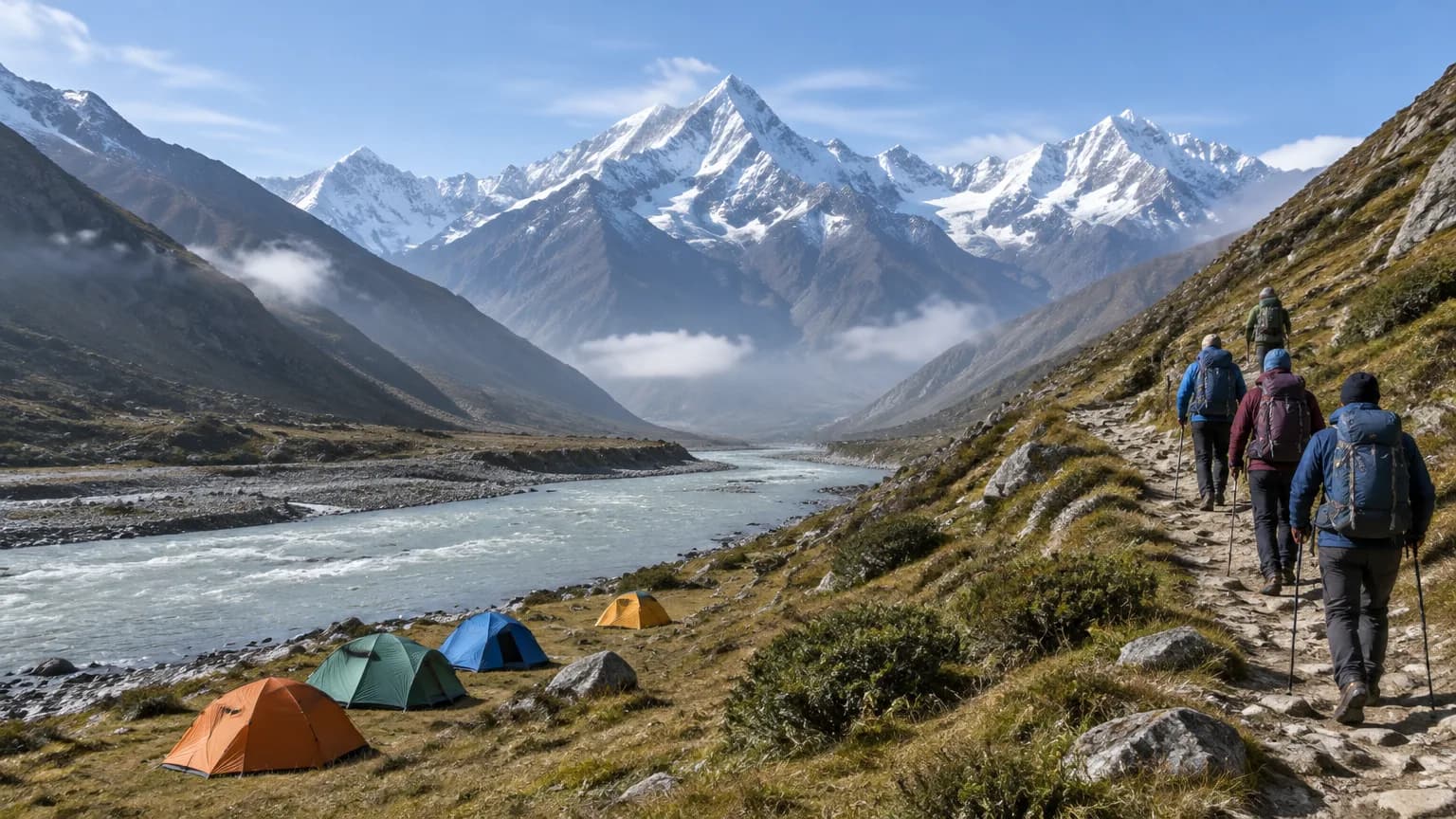
Uttarakhand Trail Trek & Camp 6N 7D
Starting from
₹17,500/ person
Uttarakhand adventure packages are domestic holiday itineraries built around the state's rivers, forest trails and high-altitude routes, with rafting, trekking and wildlife safari days arranged in advance. Expect real effort: a 16-km trek from Gaurikund to Kedarnath, Class III and IV rapids on the Ganga near Rishikesh, and long road transfers between valleys. These trips suit reasonably fit travellers who can walk four to six hours in a day, and they work best from March to June and again from September to November. Indicative land-only pricing starts at Rs.50,000 per person for 2026, with activity fees confirmed at booking.
This state rewards people who are comfortable being tired. Basic fitness matters more than technical skill. If you can climb stairs for thirty minutes without stopping and walk on uneven ground, most rafting and low-altitude trekking days are within reach.
Minimum age and health rules vary by activity and operator, so confirm at booking. Rafting operators usually set their own age and swimming requirements. High-altitude routes such as Kedartal and Gaumukh-Tapovan call for prior trekking experience and proper acclimatisation.
Choose an easier version if you have knee problems, a recent surgery, or you are travelling with young children or elderly parents. A jeep safari at Corbett and a riverside stay near Rishikesh give you the outdoors without a steep climb. For a wider mix of options, browse the Uttarakhand tour packages hub.
Match the activity to your current fitness, not to your holiday mood. The table below is a working guide; anything marked confirm at booking depends on the operator and the season.
| Activity | Effort level | Season |
|---|---|---|
| Rishikesh rafting | Moderate | September to June |
| Kedarnath trek | High | May to October |
| Gaumukh-Tapovan trek | High | May to September |
| Kedartal trek | High | Confirm at booking |
| Corbett jeep safari | Low | November to June |
| Askot sanctuary trek | Moderate | Confirm at booking |
Monsoon rain can cause landslides, flooding and mountain-road closures, especially in July and August. Snow can close higher mountain roads from November onward, and high-altitude Char Dham routes and shrines close during winter. Ask for certified guide and licensed operator details before you pay.
A rafting day at Rishikesh shows how these trips run. You reach the put-in point by road, usually in the morning, and the operator runs a safety briefing before anyone boards. The briefing covers paddle commands, what to do if you fall out, and how the raft is steered.
On the water, expect two to four hours depending on the stretch and water level. Life jackets and helmets are standard. Operators stop when water levels or weather turn unsafe, and the day is usually moved to a calmer stretch or rescheduled.
Trekking days follow a different pattern. You start early, walk four to six hours with breaks, and reach the night halt before dark. The guide on the ground makes weather cut-off decisions, not the itinerary.
Three to four nights covers one activity base well. A week lets you combine two areas without spending the whole trip in a vehicle.
| Nights | Route in words | Effort |
|---|---|---|
| 3 nights | Rishikesh rafting base with a riverside stay | Moderate |
| 4 nights | Corbett safari plus Rishikesh rafting | Low to moderate |
| 6 nights | Rishikesh rafting, then Kedarnath trek via Gaurikund | High |
| 8 nights | Gangotri National Park trekking with a Rishikesh rafting day | High |
Bring broken-in trekking shoes, warm layers, a rain shell, sunscreen, personal medication and a refillable bottle. Rafting operators usually provide life jackets, helmets and paddles. Trekking groups often provide tents, sleeping bags and meals on the route.
Permits apply to some national park and high-altitude routes, and fees differ by park and season. Confirm at booking, or check the official source before departure. Age and health declarations are common for rafting and high-altitude treks. Carry a government photo ID for park entries and hotel check-in.
Indicative land-only pricing for these itineraries starts at Rs.50,000 per person for 2026. This covers ground arrangements and does not include travel to the starting point. Activity fees, park permits and equipment rental are confirmed at booking, since they change with season and operator.
Costs move with three things: the number of nights, whether you are trekking or rafting, and whether you travel in peak months. May and June are busiest and most expensive. July to September is cheaper but carries landslide and road-closure risk. Read our Uttarakhand travel tips before you fix dates.
Two windows work for most activities: March to June, and September to November. Winter suits snow activities in higher areas but closes the Char Dham routes.
| Months | What it means for this trip |
|---|---|
| March to April | Pleasant conditions, medium crowds, medium prices |
| May to June | Busy visitor period, peak prices, Char Dham routes operating |
| July to August | Heavy rain, landslide risk, low crowds, low prices |
| September | Moderate rain, low crowds, low prices |
| October to November | Clearer conditions for trekking and photography |
| December to February | Cold and snowy in higher areas, suited to snow activities |
Most trips start from Dehradun or Haridwar, both reachable by rail and road. Jolly Grant airport near Dehradun is the main air access point. From there, shared and private vehicles cover the hill roads.
Distances look short on a map but take longer than expected. A 200-km hill drive can take most of a day. Snow can close higher mountain roads from November onward, and monsoon rain triggers closures in July and August. Carry motion-sickness tablets if you are prone to it. Entry rules for protected areas vary, so confirm at booking.
Share your group size and preferred month; we will check conditions before quoting.