
Mexico at a Glance
Mexico sits in southern North America, with coastlines on the Pacific, the Gulf of Mexico and the Caribbean. A holiday here is a multi-region trip rather than a single-resort stay, and most first-time planners do better picking one area and covering it properly than rushing across the whole country.
| Detail | What to Know |
|---|---|
| Region | Southern North America, Americas |
| Trip type | Multi-region: cities, archaeology, coast |
| Ideal trip length | 10–15 nights (one region); 18–21 nights (several regions) |
| Best season | November to April (dry season) |
| Main gateway | Mexico City Benito Juárez Airport (MEX) |
| Rainy season | May to October (afternoon thunderstorms; heavier on east coast) |
| Hurricane season | June to November (both Pacific and Atlantic coasts) |
Highland nights can be cool even in the dry season, so a light layer is useful. The rainy season brings warm mornings followed by afternoon thunderstorms, with heavier rain on the east coast and real hurricane risk from June to November.
Why Travellers Choose Mexico
Three things pull Indian travellers to this destination: the scale and variety of the archaeology, the food and craft culture, and the fact that a single trip can combine city, ruins and beach without requiring very long internal journeys.
The archaeology is the headline draw. Chichén Itzá, Teotihuacan, Monte Albán, Uxmal and Palenque are all protected sites in different landscapes, so you are not seeing the same thing twice. Teotihuacan is close enough to Mexico City for a day trip, while Palenque sits in jungle in Chiapas — two very different experiences on the same itinerary.
Food and craft give the trip its texture. Oaxaca is associated with mole, Indigenous cuisine, markets and mezcal. Mexico City covers both ends of the scale, with street food and Michelin-starred dining in the same city. San Miguel de Allende is known for cooking classes if that is a priority.
For travellers from India, the practical appeal is that the main route areas connect by domestic flight and by the Tren Maya, which links Cancún, Tulum, Chichén Itzá, Mérida, Campeche, Escárcega and Palenque. That rail connection makes a multi-base trip easier to plan than the map suggests, and it removes the need to hire a car for the Yucatán leg.
Top Places and Areas in Mexico
Ten places cover the country's main travel zones. A first trip works best with three or four of these rather than an attempt to see all of them.
- Mexico City — the urban and cultural centre, with the Zócalo, the Museo Frida Kahlo and a strong food scene. The city's Integrated Mobility Network makes sightseeing days straightforward without a car.
- Teotihuacan — an ancient city near Mexico City, known for its large pyramids and ceremonial avenue. Go early in the day; it is a full half-day out of the capital.
- Oaxaca — associated with Indigenous culture, mole, markets and mezcal. The Guelaguetza Festival falls on the last two Mondays of July for travellers who want to time a visit around it.
- Monte Albán — a pre-Hispanic archaeological site tied to Oaxaca's heritage. Pair it with an Oaxaca city stay rather than treating it as a separate base.
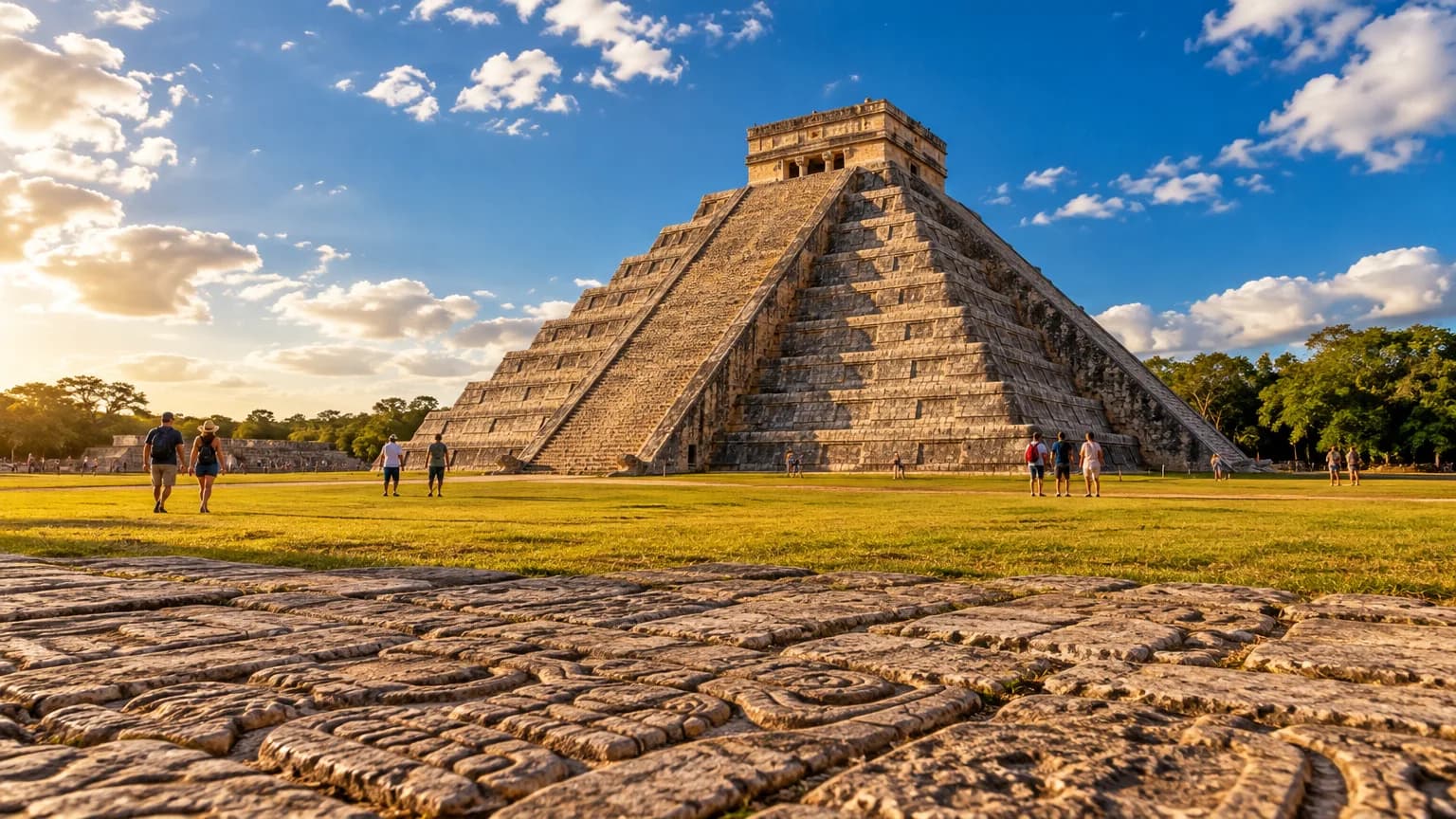
- Chichén Itzá — a Maya site with the El Castillo pyramid and other monumental structures on the Yucatán Peninsula. It sits on the Tren Maya line, so it fits naturally into a Yucatán loop.
- Mérida and Uxmal — Mérida is a practical Yucatán base, and Uxmal is known for its geometric Maya architecture. Both work as a two-night stop between Chichén Itzá and the Caribbean coast.
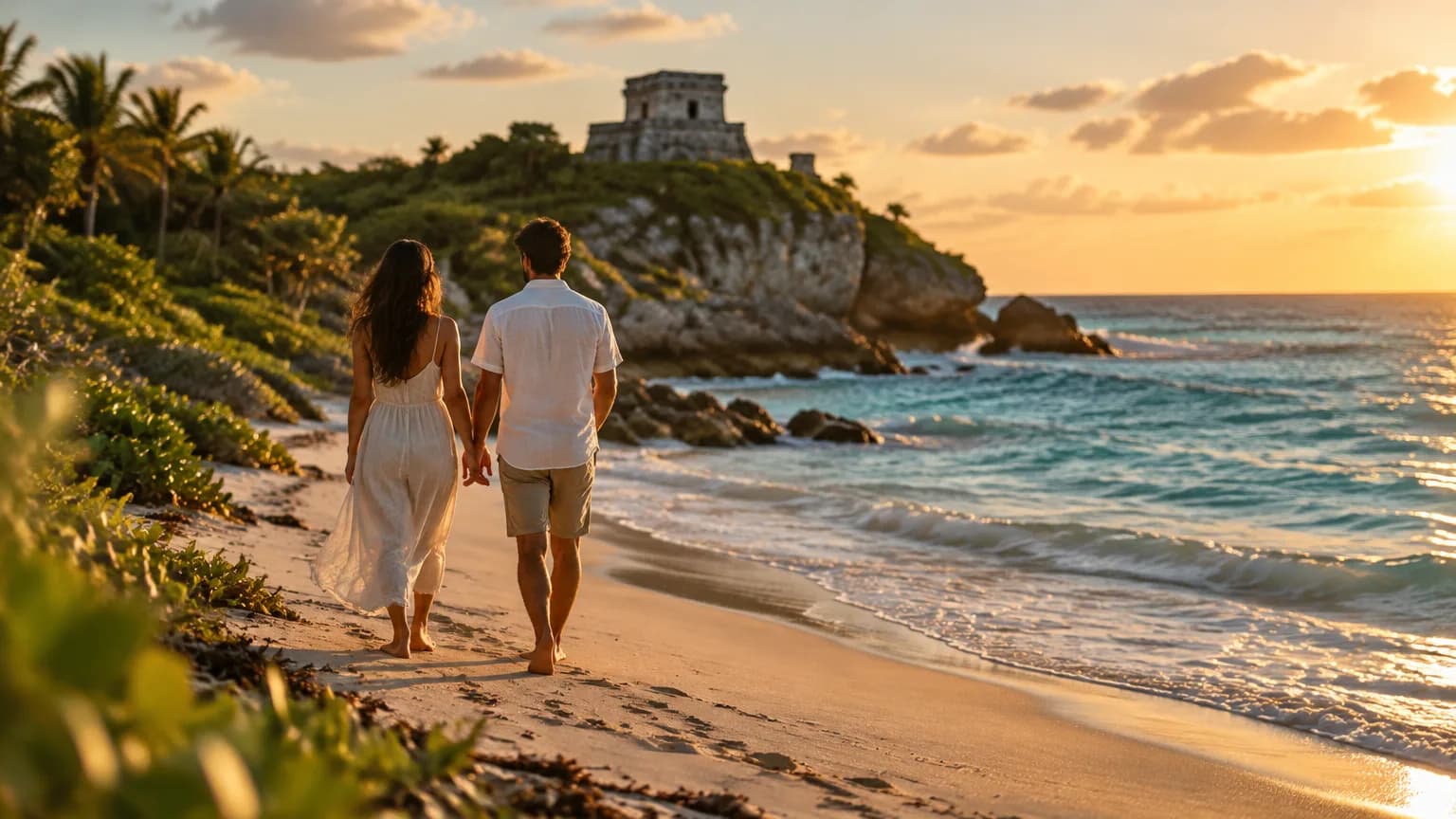
- Tulum — Maya ruins on the Caribbean coast, with a beach zone nearby. The ruins and the beach are separate visits, so plan them on different days rather than combining them into one rushed morning.
- Palenque — a Maya archaeological site set in jungle in Chiapas. It is the far end of the Tren Maya route, so place it last if you are heading south from Cancún or Mérida.
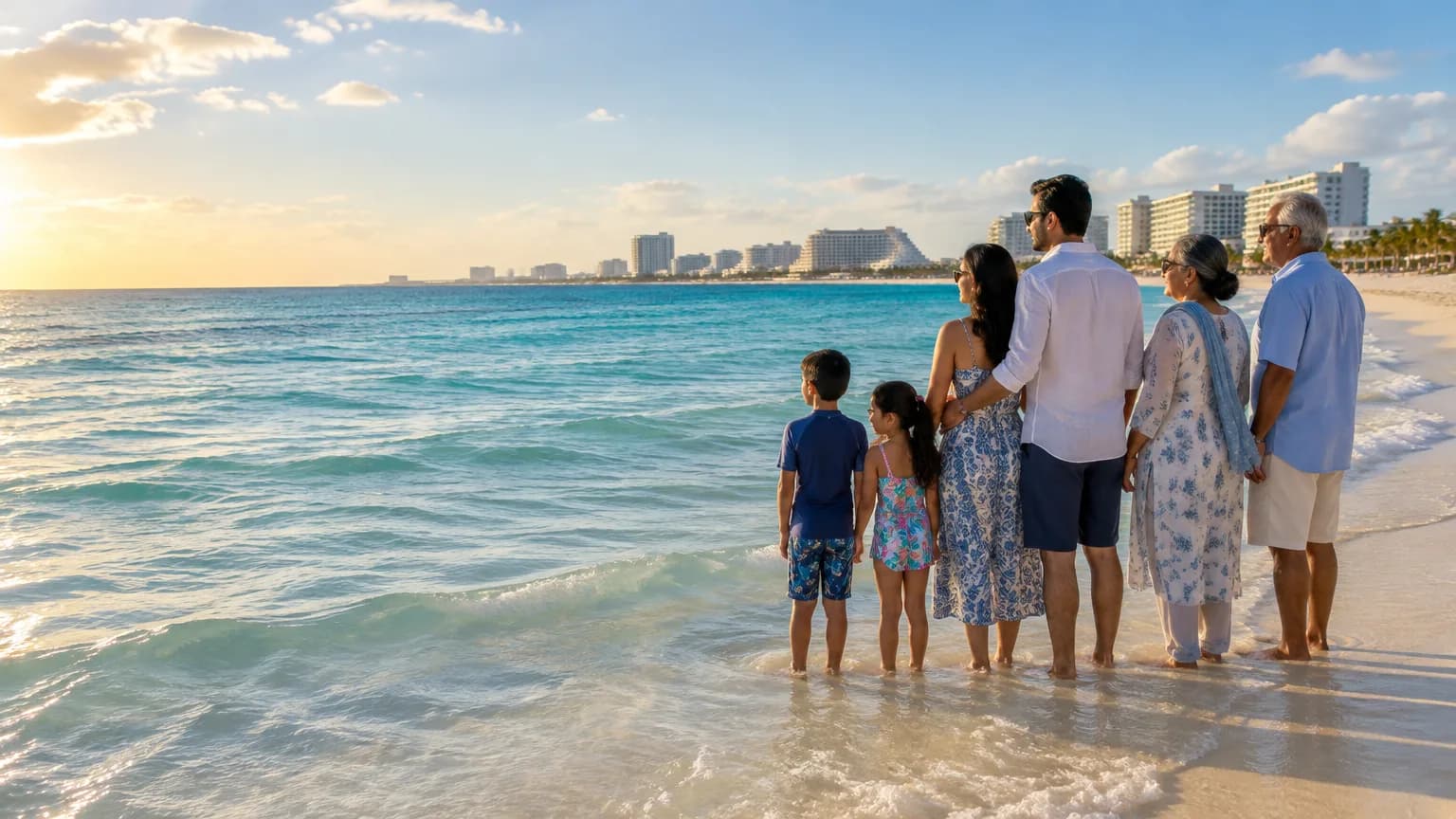
- Cancún and the Caribbean coast — the main resort and beach area for Yucatán Peninsula routes, including Playa del Carmen, Akumal and the Riviera Maya. Use it as an arrival or departure base, not the whole trip.
- Copper Canyon, Chihuahua — a large canyon system in northern Mexico used for hiking and outdoor excursions. This is a separate northern trip and does not combine easily with a Yucatán itinerary.
Best Time to Go to Mexico
November to April is the best window for most Indian travellers, with lower rainfall, warm coastal weather and comfortable highland temperatures, though January and December are peak-crowd and peak-price months.
February, March, April and November are the sweet spot. Temperatures range from around 28°C to 31°C, rain is low, crowds are manageable and prices are lower than the December–January peak. First-time planners should aim for this stretch if dates are flexible.
May and October are the shoulder months. Rain is moderate and crowds are moderate, so you get better value but should expect afternoon showers. June to September is the full rainy season — heavy rain, high crowds and peak prices — and it overlaps the hurricane season that runs from June to November on both coasts.
Two seasonal risks are worth noting. Sargassum can affect Caribbean beaches from April to October, especially June to August, which matters if the beach is a priority. Heavy summer rain can cause minor flooding and traffic delays in Mexico City.