
Field notes
Dubai Main Travel Guide for Indians 2026
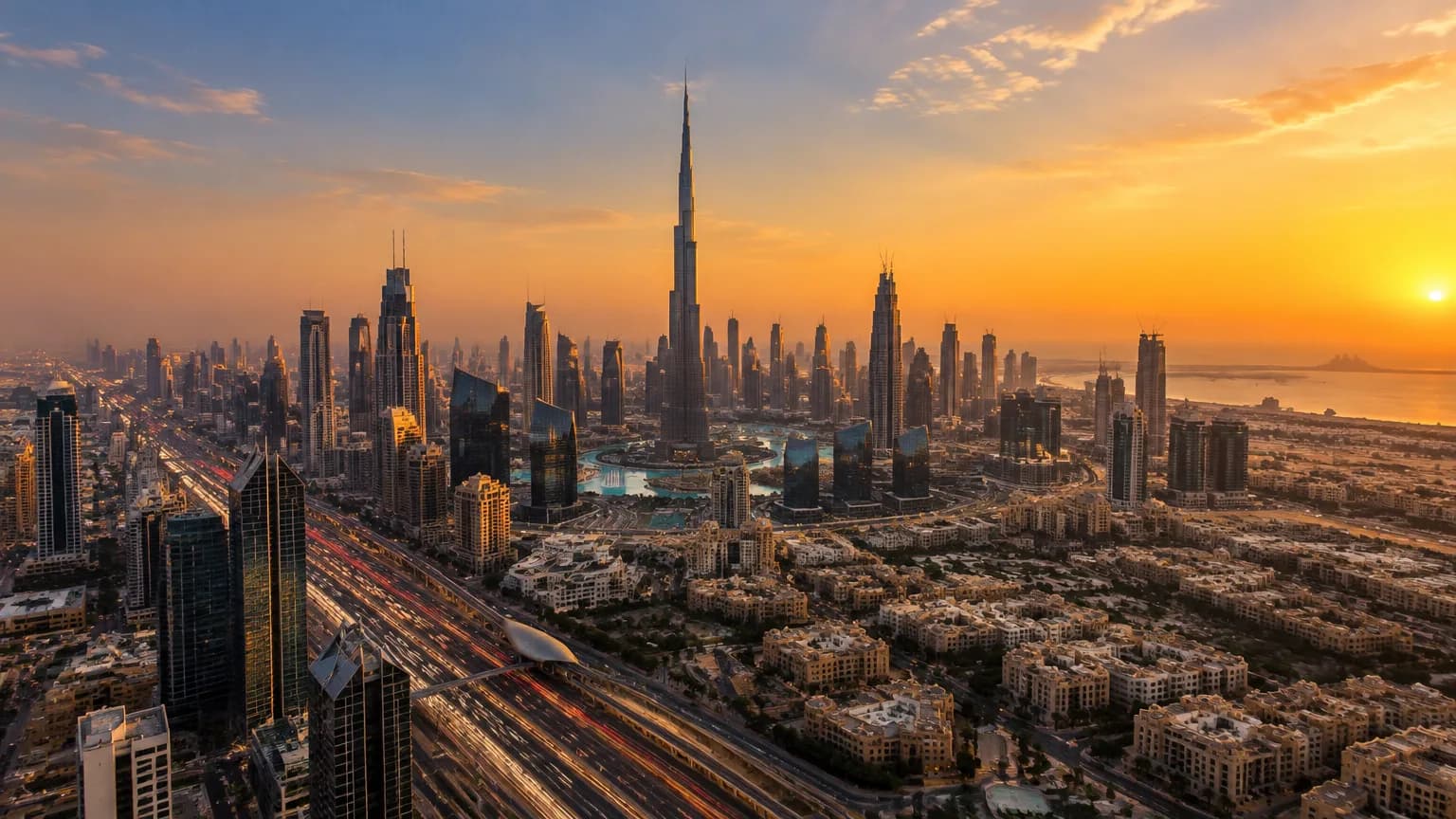
This Dubai main travel guide for Indians covers a Gulf-coast city built around Burj Khalifa in Downtown, the Marina and Palm Jumeirah coast, and the creek-side souks of Old Dubai. The best season runs November to March. Signature experiences are a desert safari, a Marina dhow cruise and a cultural food tour, suiting first-timers, families, couples and honeymooners.
Dubai at a glance
Dubai is a city on the Arabian Gulf coast in the Middle East, with its main visitor areas strung along roughly 15 kilometres of shoreline. A first trip of 4 to 7 nights covers the city, the coast and one desert day, with November to March as the best season.
| Detail | What to know |
|---|---|
| Region | Middle East, on the Arabian Gulf coast |
| Main visitor areas | Downtown Dubai, Dubai Marina and Palm Jumeirah, Old Dubai around Dubai Creek (Deira and Bur Dubai) |
| Best season | November to March |
| Ideal trip length | 4 to 7 nights |
| Gateway airports | Dubai International Airport (DXB); Al Maktoum International (DWC) |
| Entry basics | Indian passport holders need a valid passport and the correct UAE entry permission before travel; check the official source or confirm at booking |
From DXB, the Red Line metro reaches Downtown and Dubai Marina directly, and the Green Line serves Deira and Bur Dubai. The airport is about 5 kilometres from Downtown.
It helps to think of Dubai as three separate zones rather than one compact city. Downtown is the modern centre with Burj Khalifa and Dubai Mall. The Marina and Palm Jumeirah coast is the resort and waterfront side. Old Dubai, around the creek, is where the souks, the heritage lanes and the cheaper stays sit. Moving between these zones is easy by metro or taxi, but it takes time, so the smartest first-trip plans pick a base and cluster the day's activities around it.
Why travellers choose Dubai
Indian travellers pick Dubai for three reasons: desert and coast sit in one trip, the flight from India is short, and the city works equally well for families, couples and honeymooners.
Desert and coast together. A city morning, a desert safari with dune bashing and a barbecue dinner, then a Marina dhow cruise on another evening. Very few destinations fit that range into four or five nights. You can ride dunes one day and walk a beach promenade the next without changing hotels.
Old and new side by side. Old Dubai around Dubai Creek keeps the souks and the Al Fahidi Historical Neighborhood, while Downtown runs on a completely modern pace. Indian food is easy to find across the city, which takes the pressure off a first international trip. Many Indian travellers also find the city familiar in a practical way: Hindi is widely understood in shops and taxis, and the Indian community there is large.
Easy to plan. Direct flights operate from several Indian cities, the nol card covers the metro, buses, tram and marine transport, and stays range from budget districts in Deira to resort-focused Palm Jumeirah. That spread lets a Dubai holiday fit most budgets, and it means a first-time planner can build a trip without stitching together many separate bookings.
Top places to visit in Dubai
The ten places below anchor most first-time Dubai trip planning. Grouping them by area, as the list does, cuts down on cross-city journeys.
- Burj Khalifa (Downtown Dubai). The landmark next to Dubai Mall, Souk Al Bahar and Dubai Opera. Tip: book a timed slot ahead and aim for late afternoon to see both daylight and the lit skyline.
- Dubai Mall (Downtown Dubai). A shopping mall that also holds Dubai Aquarium and Underwater Zoo, Dubai Ice Rink, KidZania, Dubai Dino and a multiplex cinema. Tip: keep a half-day free if you travel with children, and wear comfortable shoes because the mall is very large.
- Dubai Aquarium and Underwater Zoo (inside Dubai Mall). An easy add-on to a shopping visit. Tip: go early, before the mall fills up, and check whether combined tickets with other attractions suit your plan.
- Dubai Opera (Downtown Dubai). A performing arts venue near Dubai Mall and Burj Khalifa. Tip: check the show calendar before fixing your dates, since performances sell out in the busy winter weeks.
- Souk Al Bahar (Downtown Dubai). A market beside Dubai Mall and Burj Khalifa. Tip: works well for an evening walk and dinner after your Burj Khalifa slot.
- Al Fahidi Historical Neighborhood (Bur Dubai). A heritage area of old lanes and buildings. Tip: pair it with the creek and the nearby souks in one morning, before the heat builds.
- Dubai Museum (Bur Dubai). Listed among Dubai's traditional cultural structures. Tip: visit in the cooler morning hours and confirm opening times before you go.
- Global Village. Country pavilions, dining, shows and fairground rides in one venue. Tip: it runs seasonally, so confirm it is open on your dates.
- Ras Al Khor Wildlife Sanctuary. A sanctuary protecting flamingos, grey herons and cormorants. Tip: carry binoculars and go in the cooler months.
- Hatta Heritage Village. A traditional cultural site away from the coast. Tip: treat it as a separate day trip, not a stop on a city day.
Grouping places by area
A simple way to avoid wasted travel time is to keep each day inside one zone. The Downtown group covers Burj Khalifa, Dubai Mall, Dubai Aquarium, Dubai Opera and Souk Al Bahar, all within walking distance of each other. The Old Dubai group covers Al Fahidi Historical Neighborhood, Dubai Museum and the creek-side souks. The coast group covers Dubai Marina and Palm Jumeirah. Ras Al Khor, Global Village and Hatta Heritage Village each need their own transfer, so treat them as add-ons.
What to book before you fly
Most visitors only need to pre-book two or three things. Timed entry for Burj Khalifa, the desert safari and any show at Dubai Opera are the ones that fill up. Everything else, including Dubai Mall, the souks and the walking areas, can stay flexible. A common mistake is to book every day end to end and leave no room for the midday heat or for jet lag.
Best time to visit Dubai from India
November to March is the best time for Indian travellers: days are pleasant to warm, and this is when the city's sparse rainfall is concentrated. Crowds and prices peak in this window, especially from December to February.
April, May and October are shoulder months with medium crowds and medium prices. April runs about 22-32 C and October about 26-35 C, while May already reaches about 36 C, so lean on indoor attractions and evening outings.
June to September is the period to avoid if you can. The monthly data shows highs of about 39-41 C with high humidity. The trade-off is low crowds and low prices, which only suits a short, indoor-focused stay.
| Period | Temperature range | Crowds and prices |
|---|---|---|
| November to March (best) | About 16-29 C across these months | High crowds; high to peak prices |
| April, May, October (shoulder) | About 22-36 C | Medium crowds; medium prices |
| June to September (avoid) | About 28-41 C | Low crowds; low prices |
Month-by-month feel
- January and February: about 16-25 C, with the coolest evenings of the year. Crowds high, prices at their peak.
- March: about 19-29 C, still comfortable for desert and outdoor plans. Crowds high, prices at their peak.
- April and May: about 22-36 C, getting hotter each week. Medium crowds and prices.
- November and December: about 18-31 C, with the festive season pushing prices up. December is the most expensive month.
Choosing between peak and shoulder
If your dates are fixed around school holidays or Diwali travel, expect to book flights and hotels early for the peak window. If you have flexibility, October and April give workable weather at lower prices, as long as you plan outdoor activities for early morning or after sunset. Rainfall is sparse across the year and falls mostly between December and March, so rain rarely changes plans.
Trip cost from India
A Dubai trip costs more or less depending on season, hotel area, ticketed attractions and transfer style. No package prices are quoted here, so check current prices before booking. The tiers below show what each budget typically gets.
| Tier | Stay category | Meals | Transfers |
|---|---|---|---|
| Budget | Deira or Bur Dubai, simple city hotels | Breakfast included; other meals self-paid | Metro with a nol card; shared pickup for the desert safari |
| Mid-range | Downtown, Business Bay, Dubai Marina or Jumeirah Beach Residence, 4-star category | Breakfast plus a few set dinners, such as a desert-camp dinner | Airport transfer plus a mix of metro and taxis |
| Luxury | Palm Jumeirah or Jumeirah beach resorts, 5-star category | Breakfast and selected dinners, including a Marina dhow cruise | Private car transfers |
What moves the price:
- Travel month: winter weeks cost more than summer weeks.
- Hotel area and category: Palm Jumeirah sits at the top, Deira and Bur Dubai at the bottom.
- Ticketed attractions such as Burj Khalifa, Dubai Aquarium and Atlantis Aquaventure.
- Private versus shared transfers and tours.
- Number of nights: a 4-night stay costs less than a 7-night one on the same tier.
For local transport, metro fares were AED 3 within one zone, AED 5 across two adjacent zones and AED 7.50 across more than two zones as of October 2026, with a nol card costing AED 25 including AED 19 balance. A regular nol Red Ticket was priced at AED 4, AED 6 and AED 8.50 for the same zone bands.
Where first-timers overspend
The most common budget mistakes are booking a luxury area for a short stay, paying for every ticketed attraction in one trip, and taking private taxis for routes the metro covers. Another is skipping the meal question: eating mostly in hotel restaurants and tourist malls costs far more than mixing in local cafes and food courts. Deciding your priority first, whether beach resort, attractions or shopping, makes it easier to choose which tier to spend on.
Items to check at booking
- Whether the package includes airport transfers both ways.
- Whether Burj Khalifa, the desert safari and the dhow cruise are included or priced separately.
- Whether the quoted rate covers the Tourism Dirham charge or adds it at check-in; confirm at booking.
- Meal plan: breakfast only, half board or full board.
- Cancellation and date-change terms, since winter dates sell out early.
How to reach Dubai from India
Most Indian travellers fly into Dubai International Airport (DXB), with Al Maktoum International (DWC) as the second airport. Direct flights are stated from Delhi, and several other Indian cities have direct or one- and two-stop options.
- Delhi: direct flights are stated, with a journey of about 3.5 hours.
- Mumbai: direct and one- or two-stop flights are stated.
- Bengaluru: direct flights operate on selected days, with a journey of about 4 hours.
- Hyderabad: direct and one- or two-stop flights are stated.
- Pune and Ahmedabad: direct connectivity is stated.
This flight information is as of September 2026, so confirm schedules at booking. From DXB, a taxi to Downtown takes about 20 to 30 minutes outside peak periods, and the Red Line metro reaches Downtown and Dubai Marina directly. The Green Line serves Deira and Bur Dubai.
Choosing a flight
A direct flight saves the most time and avoids the risk of missing a connection, which matters on a short trip. Where direct flights operate only on selected days, as from Bengaluru, fix your travel dates around those days before booking the hotel. One- and two-stop options are worth comparing if your home city has limited direct service, but check the layover length and whether baggage is checked through.
On arrival at DXB
Keep your passport, entry permission, return ticket and hotel booking easy to reach for immigration. After baggage collection, you can take the Red Line metro or a taxi. If your hotel is in Deira or Bur Dubai, the Green Line is the closer metro route. If you arrive late at night, a pre-booked transfer is simpler than working out the metro for the first time.
Where to stay in Dubai
Choose your base by area, not by hotel, because each district suits a different kind of trip. The metro or a short taxi ride links most of them.
- Deira and Bur Dubai: older districts with heritage sites and comparatively lower accommodation rates. Best for budget travellers who want the souks and the creek nearby.
- Downtown Dubai: central and modern, close to Burj Khalifa, Dubai Mall and the dancing fountain. Best for families who want attractions within easy reach.
- Dubai Marina and Jumeirah Beach Residence: a waterfront district with a canal, promenade, restaurants, beach access and evening activity. Best for couples and families.
- Palm Jumeirah: a resort-focused island area at the luxury end. Best for couples who want a beach resort base.
- Business Bay: a business district close to Downtown with mid-range accommodation. Best for business travellers.
- Jumeirah: a quieter beach-hotel area at the upscale end. Best for couples and families who prefer calmer evenings.
By budget tier, expect simple hotels in Deira and Bur Dubai, 4-star city and waterfront hotels in Downtown, Business Bay and the Marina, and 5-star beach resorts on Palm Jumeirah and in Jumeirah.
Matching area to trip type
- First family trip: Downtown or the Marina, so attractions and restaurants are close and evenings do not need long transfers.
- Honeymoon: Palm Jumeirah or Jumeirah for beach and quiet, with a Marina dhow cruise and a desert-camp dinner added as outings.
- Tight budget: Deira or Bur Dubai, using the metro to reach Downtown and the coast.
- Short stopover or business trip: Business Bay, close to Downtown and the metro.
Splitting your stay
On a 6- or 7-night trip, some travellers split the stay, for example three nights in Downtown for the city and three on the coast for the beach. This cuts daily travel time, but each hotel change costs half a day, so it rarely makes sense for stays under five nights.
Local food and cuisine in Dubai
Dubai's food ranges from Emirati and Levantine plates to the Indian food most travellers already know. These five dishes are widely available and worth trying.
- Shawarma: grilled meat in a wrap with pickles and garlic sauce, sold at street-side counters in Deira and Bur Dubai.
- Al harees: a slow-cooked wheat and meat dish, found at Emirati and traditional restaurants in Old Dubai.
- Machboos: a spiced rice dish with meat or fish, the Gulf cousin of biryani, served at Emirati restaurants.
- Grilled seafood: fish and prawns cooked over coals, common at waterfront restaurants around Dubai Marina and Jumeirah.
- Luqaimat: small sweet dumplings with date syrup, sold at dessert counters and food stalls.
Vegetarian notes: Indian vegetarian food is easy to find, and most malls and food courts have vegetarian counters. Lebanese and South Indian restaurants are the simplest route to a full vegetarian meal. When ordering traditional plates, ask whether dishes use meat stock. Cultural food tours are also listed among Dubai's 2026 experiences and suit travellers who want a guided introduction to the cuisine.
Where to eat by area
Old Dubai, around Deira and Bur Dubai, is the best area for inexpensive, local-style meals and for Indian and Pakistani restaurants that stay busy late into the night. Downtown and the mall food courts offer the widest range in one place, from quick meals to sit-down dining. The Marina and Jumeirah waterfronts are better for evening dinners with a view, usually at a higher price.
Food tips for Indian travellers
- Jain and strict vegetarian travellers should say so clearly when ordering, since onion, garlic and stock are common in mixed menus.
- Halal is the default for meat across the city, so halal labels rarely need checking.
- Tap water is generally treated, but most visitors stick to bottled water for comfort.
- Desert-camp dinners are usually set buffets or fixed meals; mention dietary needs at booking, not on the night.
Travel tips for Indians
Sort the entry paperwork first, then money and connectivity, then the local etiquette that keeps the trip smooth.
Visa and entry
Indian passport holders need a valid passport and the correct UAE entry permission before travel. Rules and processing change, so check the official source or confirm at booking. Carry your visa, return ticket and hotel booking in print or on your phone.
A few checks save trouble at the airport. Confirm your passport has enough validity beyond your travel dates, that the name on the ticket and visa matches the passport exactly, and that your hotel booking covers the full stay. Apply early rather than in the last week, since processing time can vary and peak season is busy.
Currency and payments
The local currency is the UAE dirham (AED). Cards work widely, but keep some cash for souks, small shops and taxis. Check current exchange rates before you travel. Ask your bank about international card charges and notify it of your travel dates so cards are not blocked abroad.
SIM and eSIM
A local tourist SIM or an eSIM bought before departure keeps you connected. Airport counters and city shops sell SIMs, and most recent Indian phones support eSIM. Check that your phone is unlocked and that eSIM is supported before you buy. Hotel and mall Wi-Fi is common, but a data plan helps with maps and ride apps.
Getting around
A nol card is required for the metro, buses, tram and marine transport. The nol Red Ticket fares depend on travel zones and on regular or Gold class. The metro is the simplest way to link DXB, Downtown, Dubai Marina, Deira and Bur Dubai, and Dubai Mall is reachable by metro, bus and car.
Taxis are practical for evenings and for routes the metro does not serve. Keep a card balance on your nol card so you do not have to top up at every journey, and note that Gold class costs more than regular class.
Safety and etiquette
Dubai is generally comfortable for families, couples and women travellers, including evening outings in busy districts. Dress modestly in souks, heritage areas and places of worship. Avoid eating, drinking or smoking in public during Ramadan daylight hours, and ask before photographing people.
Public displays of affection are best kept low-key, and loud or aggressive behaviour in public can cause trouble. Alcohol is available at licensed venues only, and carrying or consuming it outside them is not allowed. Medicines can have restrictions, so carry prescriptions for any regular medicines and check the official source if unsure.
Is Dubai right for you?
Dubai suits travellers who want variety in one trip and can handle a spread-out city. It suits first-timers, families, couples and honeymooners; it suits less well anyone expecting a compact, walkable destination, because the main visitor areas sit along the coast and need longer cross-city journeys.
Short trip versus long trip
A 3- to 4-night trip works if you choose two areas, for example Downtown plus one desert day. A 5- to 7-night trip lets you add Dubai Marina, Palm Jumeirah and Old Dubai without rushing. Anything under 3 nights leaves a lot of the stay spent in transit.
Who it suits
- First-time international travellers who want an easy flight and familiar food.
- Families, thanks to Dubai Mall attractions, KidZania, Dubai Ice Rink and Global Village.
- Couples and honeymooners, with Marina dhow cruises, desert-camp dinners and resort stays on Palm Jumeirah.
- Budget travellers, since Deira and Bur Dubai keep accommodation costs lower.
Who it suits less
- Travellers who want a compact, walkable base.
- Anyone planning long outdoor days between June and September.
- Travellers who want a quiet, green, slow-paced holiday.
Traveller types and what to prioritise
Families with young children do best with a Downtown base and a plan built around Dubai Mall attractions and one desert evening. Couples and honeymooners get more from the Marina and Palm Jumeirah coast, with a dhow cruise and a desert-camp dinner as the two signature outings. Cultural travellers should reserve a full morning for Old Dubai and add the food tour. Adventure seekers can add Atlantis Aquaventure and a dune-bashing safari. Wildlife interest is modest, limited mainly to Ras Al Khor Wildlife Sanctuary.
Once the plan feels right, compare the current Dubai packages and pick the one that fits.